




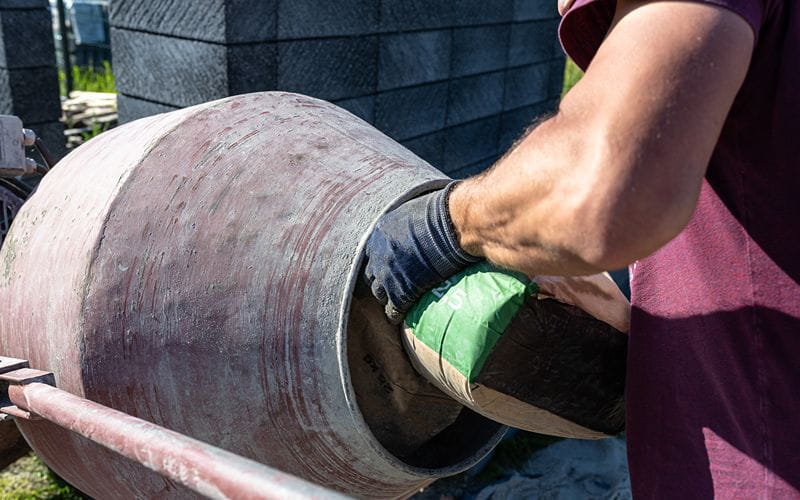
- Concrete mixer problems commonly stem from engine faults, worn or slipping drive belts, poor lubrication, drum buildup, and structural wear caused by demanding site conditions.
- Regular maintenance, including cleaning the drum, checking fuel and air filters, lubricating moving parts, inspecting belts, and securing safety guards, helps prevent breakdowns and costly repairs.
- BS Power offers durable concrete mixers, including 360L Baumax and 420L Honda models, designed for reliable performance, efficient mixing, and long-term use on construction sites.
Concrete mixers, from both the client’s and the operator’s perspective, is one of the most essential and heavily relied upon machines on any building site. Yet even a well-built machine can fail, and reliable diagnosis is achieved through an approach that is methodical rather than subjective.
Having worked in the South African concrete mixer supply and service industry for many years, we have seen how most outages stem from only a handful of causes, which are always predictable and preventable. This article seeks to discuss these causes in an organised and logical fashion and to approach troubleshooting in a systematic manner. The object of this article is to provide a rational stepping stone to ensure your mixers are safe, productive, and cost-effective for their working lives.
Why They Fail On Site
The working environment of mixers is nothing if not severe. The drum is in constant rotation under load, while highly abrasive aggregate and alkaline cement paste are continually propelled against steel surfaces. The engine labours in dust, heat and with constant vibration, and is often transported over rough terrain. It is therefore perhaps unsurprising that typical wear patterns can be observed in mixers, and that understanding these patterns is the first step in diagnosis.
Environmental influences increase these effects. For example, in the Western Cape, moisture in the coastal air speeds corrosion; in summer, heat can thin lubricants and hasten evaporation from fresh batches. Where the concrete mixer is parked outdoors, exposed to the elements without shelter, they will also fail faster, and this must be considered when scheduling maintenance.
Engine Starting Faults
The petrol engine is the most common cause of complaint from the users of concrete mixers; most engine problems can be summarised as three requirements: fuel, air, and spark. When an engine does not start, then these three need to be checked in that order. Petrol ‘goes off’ and deposits varnish, which will clog the carburettor jet; any fuel left for more than a few weeks should be drained.
The second thing to check is air supply. Because cement creates a dustier environment, the filter blocks up much sooner than on other machines. The blocked filter makes the engine difficult to start, produces black exhaust fumes, and restricts airflow to the engine, which also causes a loss of power under load. Cleaning the filter is inexpensive, so it should be a routine task. The plug should be removed, checked for fouling and then tested for spark. A worn or wet plug is one of the main causes of rough running.
On many current engines, low oil triggers the shutdown sensor and prevents the engine from starting; a stop switch or kill wire may vibrate out of position. Both are simple to check, and both are items we thoroughly check first when we are told the mixer will not fire up. If the engine hunts or surges, it is most often caused by a partially blocked carburettor or an air leak into the induction system. Overheating should also be checked, because many of the engines fitted to these machines are air-cooled; blocked cooling fins or a missing shroud can cause power loss and premature failure.
Drive Train And Belt Problems
A transmission ensures power is fed to the drum and relies on V belts, a reduction gearbox and a ring gear. A slipping belt will squeal loudly and smell musty, while a drum may stop or fail to turn when loaded. Problems arise because a belt is slack, glazed or contaminated with oil. The belt should be checked for cracks, adjusted as needed following the manufacturer’s recommendations and replaced if worn or broken. If twin belts are fitted, they should be replaced as a set, as unequal wear will place uneven load on the pulleys.
Both the ring gear and the gearbox need lubrication. If you hear a grinding noise, if the lubricating grease overheats or if you see metallic matter inside the grease, this means that lubrication is failing or that the teeth are wearing too fast. Cement can be very abrasive, so any concrete mixer is designed with a ring gear cover, which should always remain attached during the working cycle and be opened only periodically for cleaning and re-greasing.
Drum, Blade And Buildup Problems
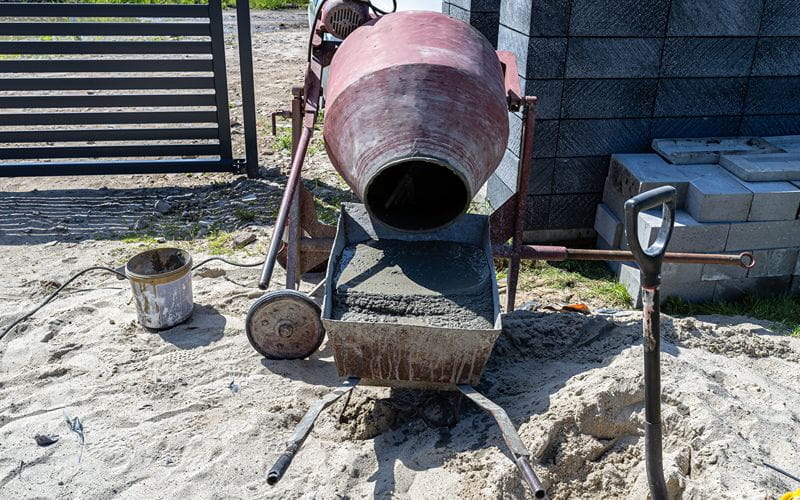
The drum is the working heart and for consistent output and quality, its condition is the most critical. The most prevalent drum failure is the build-up of dried cementitious material on the inside walls of the drum and in the pockets on the blades themselves. Every layer of accumulated build-up reduces the effective volume of the drum, alters the tumbling action, and strains the engine.
Prevention is always the best cure. The drum is best rinsed out using water and a handful of coarse aggregate at the end of each batch before the material dries out. The wear of the blades and drum bottom is the second issue with a concrete mixer. The aggregate gradually chips away at the steel and, eventually, as the blades lose their shape, the mixing action is not powerful enough to fold the mixture; cycle times lengthen and pockets of unmixed material appear.
Therefore, a manufacturer of high-quality concrete mixers will specify a thick drum bottom, as much of the wear occurs here. Seal failure is indicated by slurry seeping out of the hub, while any cracks in a weld should be mended promptly by a professional welder because vibration causes cracks to spread. More costly repairs can be the result if the operator ignores these symptoms.
Poor Mix Consistency
Inconsistent production is attributed to the machine when it is a loading method problem. It is well established that concrete mixers perform best when the mix is introduced in a predetermined order: part of the water, coarse aggregate, cement, and sand, and finally the rest of the water. A second issue is overloading. Each single-compartment concrete mixer drum has a rated capacity for unmixed material, which is less than the apparent volume of the drum, to account for the space needed for tumbling.
If an overfilled batch is placed in the drum, the mixture becomes a solid mass and properties such as strength and workability become inconsistent. Drum inclination and mix time are also relevant, as an insufficient cycle yields an uneven batch, whereas an excessive one makes segregation inevitable. In addition, contaminated aggregate or sand of variable moisture may yield unpredictable results regardless of the state of the equipment.
Structural And Mobility Faults
The chassis carries the heavy drum, the engine, and the load of wet material, and is repeatedly moved and jostled. Welds are often cracked, axles are bent, and screws and studs come loose in ageing machines. Semi-solid wheels do not puncture, but they can wear unevenly, whereas pneumatic wheels must be inflated to the correct pressure. Where mixers are towed, the tongue, wheel fasteners and track width should be inspected before each trip; post-trip inspections are particularly helpful, as towing can work fasteners that would otherwise remain secure.
Stability is also vital, as the concrete mixer is often positioned on soft or uneven ground and can easily overturn unless they stand on firm, level ground with the wheels chocked; tilting can also disturb discharge and place stress on the drum supports. Guards and covers should be left in place, as the engine cabin encloses hot surfaces and moving parts that could cause injury to the operator. Safe operation of the machine necessitates keeping safety devices in position.
Reliable Mixers From BS Power
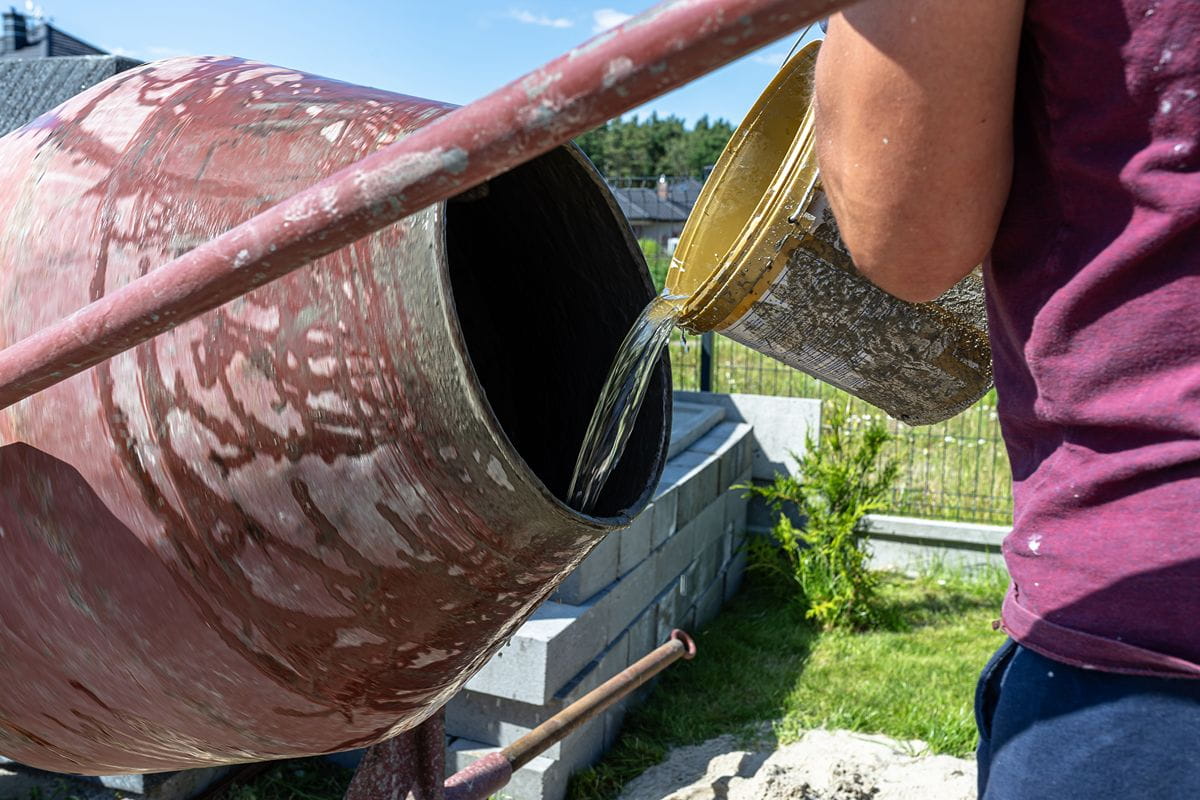
Solid design solutions can minimise many of these issues, and all our mixers have been specified accordingly. The 360L Concrete Mixer with Baumax engine has a Baumax RX200 2:1 6.5HP engine and a V-belt transmission, a 360-litre drum with a 260-litre unmixed capacity, a drum speed of 25RPM, a mix cycle of 2.5 minutes and an output of 5m³ per hour. It has a 3mm wear-resistant drum bottom. It has a ring gear cover to prevent the entry of dirt and water, and an enclosed engine cabin, which helps with heat dissipation and assists with drive system reliability.
The 420L Concrete Mixer with Honda engine offers a 420 litre single drum with a 320-litre unmixed capacity and is powered by a Honda GP160 5.5HP petrol engine. It features a twin V-belt drive for longevity, a 3mm drum thickness and a redesigned engine cabin. As with all our concrete mixers, actual output will depend on the type of material being mixed and the degree to which the drum is tilted. Contact our experts to find out which of our machines is the right choice for you.
Conclusion
At BS Power, we like to treat all our machines as long-term investments rather than disposables. Concrete mixers that are rinsed after use, greased regularly, and checked before each shift will provide years of reliable service, while those left to rot will result in delays, additional expense, and a risk of injury. To find out how best to do this, or if you have any questions, order spare parts, or a new machine, please contact our team, who will help you keep concrete mixers running for longer.