




Every concrete mixer has its limits, but those limits are different across makes and models. Buying a mixer with a small drum, weak engine and poor build, will only save you money in the short term. Unfortunately, this decision is signing you up for questionable results and an unquestionably short lifespan. Instead, you could turn to BS Power to see how the mixers we supply work to actively overcome the limits faced by standard mixers. In this article, we’re going to explore the nature of those limits and the specific ways in which our mixers have evolved to overcome those, providing you with the ultimate investment.
The Core Function Of The Concrete Mixer
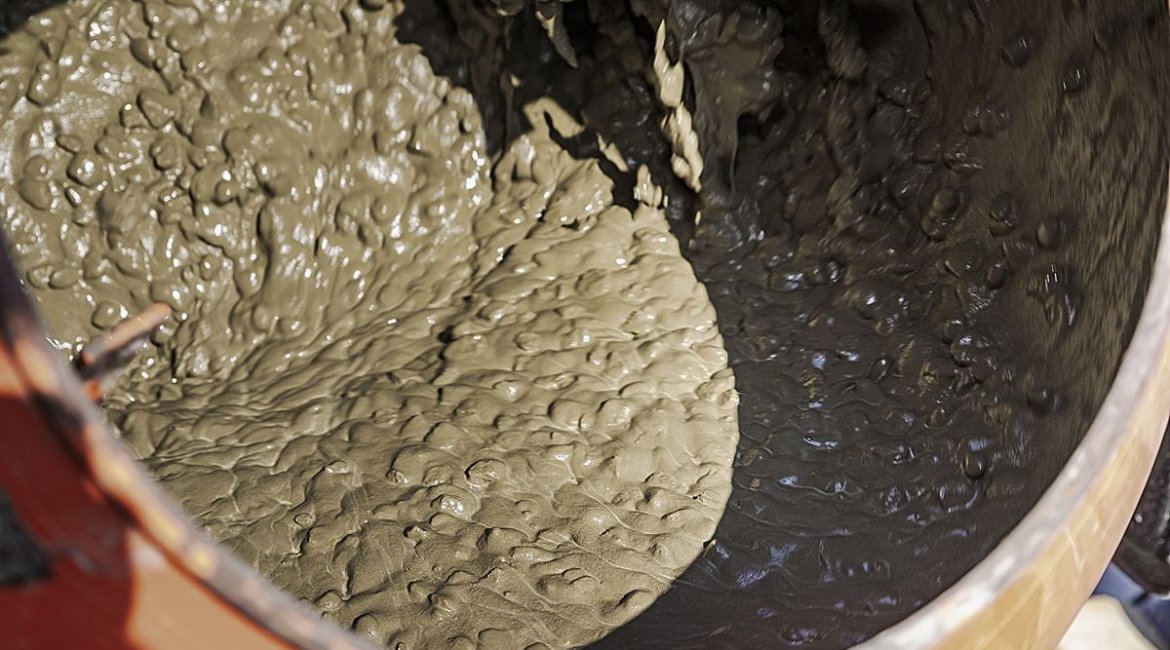
The core function of a concrete mixer is by no means a complicated affair. As the name would suggest, the goal of these sturdy machines is to take the disparate ingredients of concrete, such as cement, sand and gravel, then mix those together until they form a cohesive, uniformly blended concrete.
The mixing itself happens in a large steel drum, which is powered by a motor. Both are held within a robust metal frame with a low centre of gravity to promote stability and prevent tipping. There are peripheral features which aid in the function of the mixer in a variety of ways, such as wheels or treads for mobility, a chute for easy discharging and a hopper for the feeding of ingredients.
The higher the quality of these components, the greater the limits of the concrete mixer are. A mixer made of many, or all low-quality and cheap pieces will only be able to yield inconsistent batches of concrete, usually in small quantities. Inversely, a mixer made from top-notch individual components will be able to provide you with a far better foundation for your work, quite literally.
What Happens When You Overstrain A Concrete Mixer
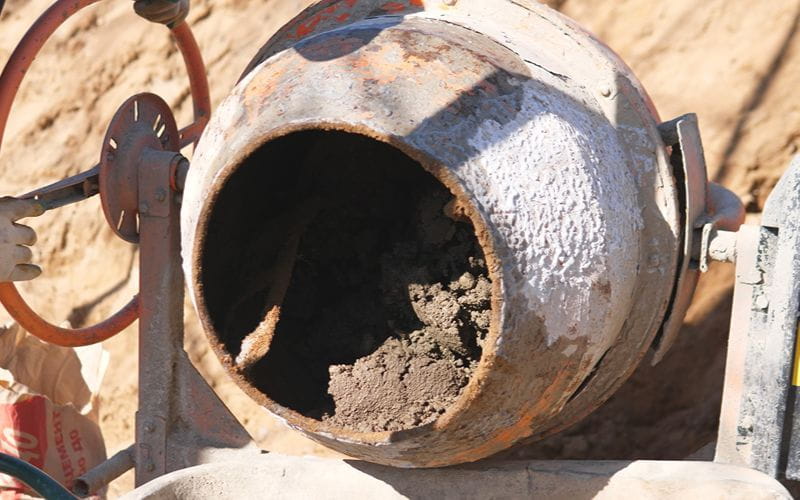
We are going to illustrate for you a hypothetical scenario that unfortunately is all too common an occurrence: a contractor is in need of a concrete mixer to handle a large-scale operation, but baulks at the price associated with a larger or more powerful model. Settling instead for a less ideal but cheaper model, the contractor heads over to the worksite to begin the task of mixing concrete.
At first, instructions regarding the limits of the mixer are followed, respecting the maximum quantity of ingredients the drum and the motor turning it can handle. Soon this proves to be setting too slow a pace for the project to be completed within an acceptable timeframe, and the limits of the mixer are beginning to be stretched, then exceeded entirely. The batches immediately begin to deteriorate in quality, and the mixer seems to be slowing down. After a depressingly short period of time, the entire machine has stopped working, and there are ominous wisps of smoke coming from the motor.
The contractor is forced to pause the project and either seek out repairs or a replacement of the entire unit. Either way, those initial savings made by taking the subpar choice of mixer have come back to prove themselves as massive expenses instead, not even including the incurred losses caused by the halt in construction.
The Limit Of Capacity
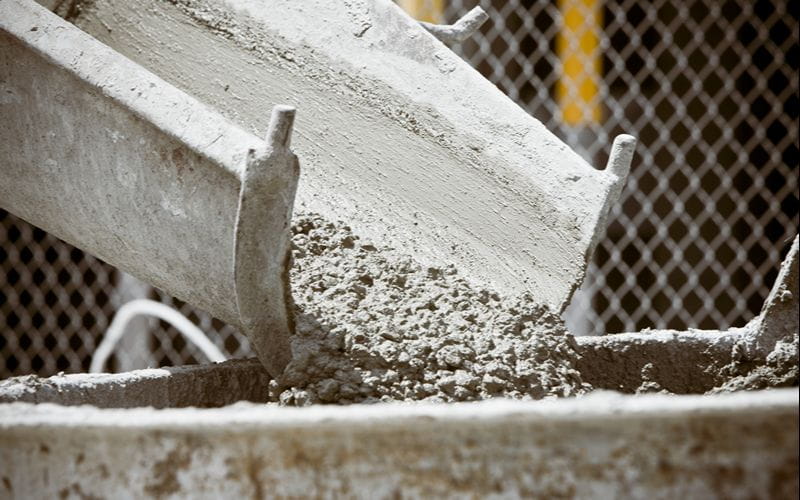
The most important limit tied to concrete mixers is the total capacity of material it can receive, and thus the concrete it can produce, per batch. It is determined by the physical size of the drum, with larger drums obviously being able to take on a more voluminous capacity. It’s important to note that while the size of the drum does correlate directly with the total capacity, it is not a 1:1 ratio. Instead, you can expect a 360L drum to produce a total wet yield of about 180 to 220L of concrete. Keep this in mind when working out which drum capacity you’ll need to tackle your intended project.
The way that BS Power works to help our clients overcome the limit of capacity is to provide a large stock of concrete mixers that represent a vast range of drum capacities. Our range extends all the way up to 500L, providing you with a wet yield of up to 280L per batch. Having access to these larger mixers takes away the need to push your smaller mixers beyond what they can handle, offering a reliable and effective solution for large project use instead.
How To Overcome The Limit Of Power
A mixer has no small task ahead of it; mixing up to hundreds of litres of hard, heavy ingredients at a time for long periods of time, day after day. To make this all happen, the mixer has got to have a powerful motor to support it. How strong a motor should be depended on the capacity of the drum, as bigger and heavier drums need a stronger motor to keep things running. The inverse applies too, meaning that less powerful motors are totally fine, as long as it’s a smaller drum being used. The important factor is that the ratio between size and motor strength is balanced to yield consistent results.
BS Power specifically is known for supplying mixers with particularly powerful motors. Our Honda and Baumax motors don’t just meet the bare minimum requirements in relation to drum size; they go beyond the basics to yield faster and more thorough results. This allows you to use our mixers to complete projects within a shorter timeline without needing to worry about putting excess pressure on your mixer’s motor.
How To Overcome The Limit Of Fuel Efficiency
While power is an incredible asset to have in one’s equipment, particularly for a professional contractor, it does bring up the equally important matter of fuel efficiency. No bold new claims are being made with the statement that petrol prices are high. Any machine with a tendency to guzzle petrol to maintain a powerful output could be a very serious liability to a contractor. That’s exactly why fuel efficiency is such an important factor in concrete mixers, and why BS Power has invested itself in providing fuel-saving options.
The Honda GX160 is a great example of this in practice, a motor found in our mixers that manages to simultaneously yield an impressive power output and fuel efficiency. Per every hour of use, these motors can consume as little as 1.5L of petrol, making them very cost-effective compared to less efficient models.
An even more efficient alternative would be to invest in an electric mixer. These do not yield as much power as their petrol counterparts, are reliant on constant access to an electric grid, and are limited in mobility by a power cord. In turn, however, they are incredibly fuel efficient, much more environmentally friendly, and produce comparably little noise.
The Limit Of Durability
Tough isn’t enough when it comes to concrete mixers. These machines perform seriously heavy-duty work, mixing hundreds of litres of heavy, abrasive, hard and sharp-edged materials all day long. Their powerful motors produce a strong vibration that rumbles the entire machine from within. They operate in construction sites, where accidental impacts are common. The environment itself is a tax upon everything within it, being in direct exposure to dust, grit, sun and rain throughout the day.
A mixer shouldn’t just be able to withstand these elements once off; it should be able to thrive while being immersed in these environments throughout its entire lifespan. To make this happen, BS Power provides mixers made from top-quality materials assembled using intelligent design that minimises strain.
With these underlying principles guiding the construction of our mixers, they’re bound to last you for years and years. On your side, just ensure that you’re doing what you can to take care of your mixer, thus ensuring a longer and more productive life. This is a simple process that revolves around regular cleaning, inspection and maintenance, including storing the unit in a clean, cool and dry area when not in use. This does wonders to increase the overall value of the mixer, validating the initial investment into a higher quality mixer to a massive degree.
Conclusion
In conclusion, there are clear limitations to what a concrete mixer can and cannot do. However, with the right purchase from BS Power, you can go far beyond what you’d expect from an ordinary mixer. It all begins with choosing the right drum capacity to suit the needs of your project, selecting from our wide range of sizes that extend all the way up to 500L. Next, you’re going to need to check that the power of the motor is enough to handle that capacity, as you can be sure of when purchasing from BS Power. To keep operational costs low, we’ve invested specifically in fuel-efficient models, in both petrol and electric variants. Moreover, BS Power mixers are famous for their durability, which can only be aided by an attentive routine of maintenance.