





- Explains common fuel-related problems that affect brushcutter performance and engine lifespan.
- Covers best practices for mixing, storing and using fuel to prevent engine damage, blockages and starting difficulties.
- Highlights the importance of regular fuel system maintenance and choosing a suitable, fuel-efficient brushcutter.
Brushcutters are only as good as the fuel you put in them, and at BS Power we care more about brushcutters being sent back for repair because of poor fuel-related issues than almost anything else. If you depend on brushcutters to clear land daily, maintain your farm, or do verge work for the municipal authority, the engine on your brushcutter’s cutting head deserves the same respect you give the cutting head itself. Petrol two-stroke engines are truly elegant in their simplicity, yet that very simplicity is what makes them so harsh that even a little fuel misuse can punish you.
A clogged carburettor, a fuel line with sticky fuel, or a stuck piston seldom gives any warning. Rather, they come as a surprise, quite often on a day when you least expect it or one where stopping the work isn’t really an option. These pages cover the fuel problems that commonly cause brushcutters to fail in South African conditions, plus practical steps you can take immediately to ensure your brushcutter works exactly as intended.
Why Brushcutters Are So Sensitive To Fuel Quality
Every single one of our brushcutters, whether it has a Husqvarna badge on it or a Stihl badge, is powered by a small high-revving 2-stroke or 4-stroke engine. They are turning at thousands of rpm and rely on a fine spray of a mixture of fuel and oil, precisely in the right proportions, reaching the combustion chamber. There isn’t a huge margin for error. A four-stroke lawnmower engine can often cope with a slightly stale tank of petrol. A brushcutter engine cannot, and that is just the way a brushcutter is. The carburettor jets are tiny, and the tolerances in the crankcase are tight, so any contamination, moisture or degraded mixture from the fuel simply appears as hard starting and poor idling or a loss of power under load.
Use The Correct Fuel Mixture Every Time
The number one reason for failure in fuel-powered brushcutters is an incorrect petrol-to-oil ratio. Use too little oil, and you run the engine hot and cause excessive wear to the piston and bearing surfaces far more quickly than normal. Use too much oil, and you will be blowing smoky exhaust, fouling the plug, and causing carbon build-up, which will cause it to choke performance eventually. Most of our petrol brushcutters, Husqvarna and Stihl, come with instructions to use a 50:1 mix of unleaded petrol and good two-stroke oil. Always seek out the operator’s guide for your brushcutters, as a few models use a different ratio, and this alone can drastically lower the lifespan of an otherwise good bike.
Mix your fuel in a separate container rather than the brushcutter’s tank. Pour the oil in first, followed by petrol, and give the container a good shake rather than just swirling it about. Even a day-old premixed fuel will settle to the point where the first few minutes of running could deprive your engine of lubrication. If you run more than one brushcutter on your site, then clearly mark your mixing containers so that no one accidentally tops up the brushcutters with straight petrol.
Buy Fresh Fuel And Use It Quickly
Petrol starts to break down as soon as it is refined, and the process accelerates as soon as two-stroke oil is added to it. As a rule, use mixed fuel within thirty days, or within two weeks if your brushcutter is in regular use. Old fuel loses its volatile components, which makes it difficult to start, and it can leave a sticky varnish inside the carburettor that is inside the carburettor, which will be time-consuming and costly to clean. If you have been using your brushcutter and you have a full season behind you, do not assume that the tank full of fuel is still good. Drain it away, dispose of it in a suitable place and start afresh.
Buy only the amount of fuel that you estimate you will use over that period. It may seem more practical to buy a large 250-litre drum and use it over a prolonged period, though if you only use your brushcutter for a few hours a week, it is better to buy smaller batches more regularly. This will keep the engine happier than a large amount stored over a prolonged period. This is especially true with ethanol-blended petrol, which is now common at South African filling stations. Ethanol absorbs water from the atmosphere at an alarming rate, which later sinks to the bottom of the tank, is sucked in through the carburettor, and causes the rough idling and stalling that many brushcutter users take for engine faults.
Store Fuel And Brushcutters The Right Way
It is not only about what you use to store your fuel, but also how you store your brushcutter when it is not in use. Fuel should be stored in a safe metal or heavy-duty plastic container, away from direct sunlight and extreme heat, as both factors speed up the breakdown of the petrol and oil mixture. A proper fuel storage container will always beat homemade improvisation for performance, and it also minimises the risk of contamination from a poor seal.
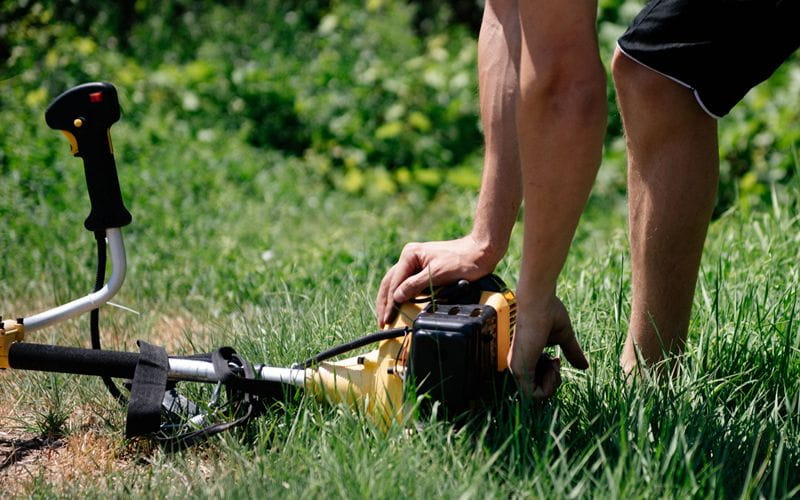
For the brushcutter, if you can’t predict its next use and it might be longer than a few weeks without operation, drain the fuel tank as much as it is safe to do so, then let the engine run out until it gets dry. This removes fuel from the carburettor and prevents the sticky build-up of deposits which cause so many brushcutter starting complaints after it comes back from storage to its first work of the season. When storing the brushcutters itself, choose a clean and dry place as far as possible from the ground and not in a position where the daytime and nighttime temperatures are dramatically different because the moisture that condenses in a partially full tank is a stealthy and constant source of contamination.
Keep the Fuel System Clean and Well Maintained
Your brushcutter’s fuel system, even if you practice a healthy fuel habit, needs to have parts like the tank-mounted fuel filters checked, replaced, or repaired from time to time. The filter located inside the tank is a small mesh filter that captures debris before it gets to the carburettor. You need to check and replace it on the schedule your user manual suggests – it is a job once or twice a season, according to the degree and frequency of use a brushcutter is put through. If a filter is partially blocked or dirty, it limits or cuts off fuel delivery of the brushcutters under load, and it seems like you run out of power just when you are breaking free from thick vegetation.
Choose A Brushcutter Built For Efficient Fuel Use
Fuel discipline is more or less important based on which machine you are operating, and it is in such cases that selecting a suitable brushcutter from the beginning proves beneficial. Our Stihl FS 460 L Brushcutter is fitted with the STIHL 2- MIX engine, which is designed to offer high cutting power and low fuel consumption, as well as combining this with STIHL M-Tronic, an advanced, completely electronic engine management system that dynamically adjusts ignition timing and fuel metering to adapt to environmental conditions like temperature, altitude, and the quality of the fuel used.
For a professional brushcutter working full days on farms or large estates, this sort of automatic fuel management helps take a lot of the uncertainty out of keeping a clean-burning engine running, and the 0.75 litre tank is sized for a genuinely economical burn rather than a large tank in compensation.
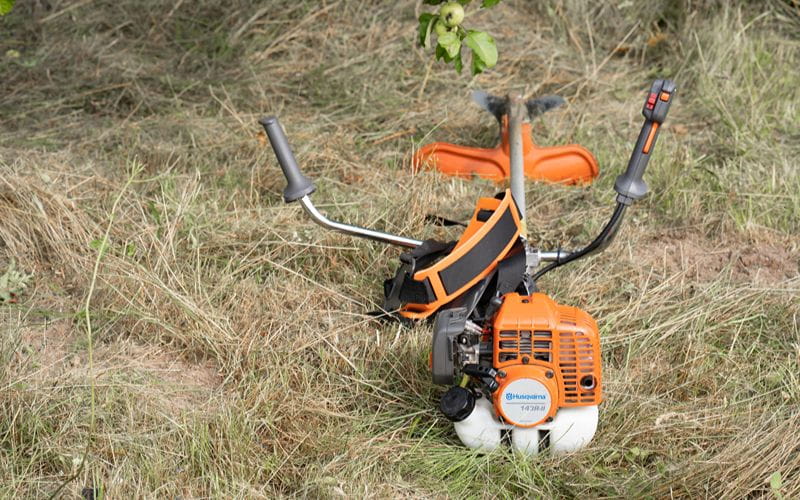
The other end of our range, the Husqvarna 541RS Brushcutter, is designed for the daily grind in heavy, dusty conditions and can handle fuel consumption efficiently with its 1.6kW power rating while still providing torque for the demanding clearing work.
Talk to BS Power About Your Brushcutter
Fuel-wise, good practice isn’t the kind of thing that makes your life more complicated, but you really need to get used to it because if you look after the brushcutter’s fuel properly, it will definitely have the edge over the one you don’t treat. If a brushcutter you have is already giving you problems like starting difficulties, running issues, and power decrease, you must not give yourself time for it to aggravate.
Contact BS Power on 021 981 6040 or email info@bspower.co.za, and our team will help you find out whether the problem is fuel-related or something else entirely. If you are looking for a new unit, check out our complete range of brushcutters, including the Stihl FS 460 L and Husqvarna 541RS, then talk to our team about which type of engine and fuel system matches the kind of work you do. Find us at 31 Patrys Crescent, Okavango Park in Brackenfell or get in touch to make sure you get a brushcutter that fires up on the first pull and runs smoothly throughout the day. That is the type of power you’ll be able to have complete confidence in.