




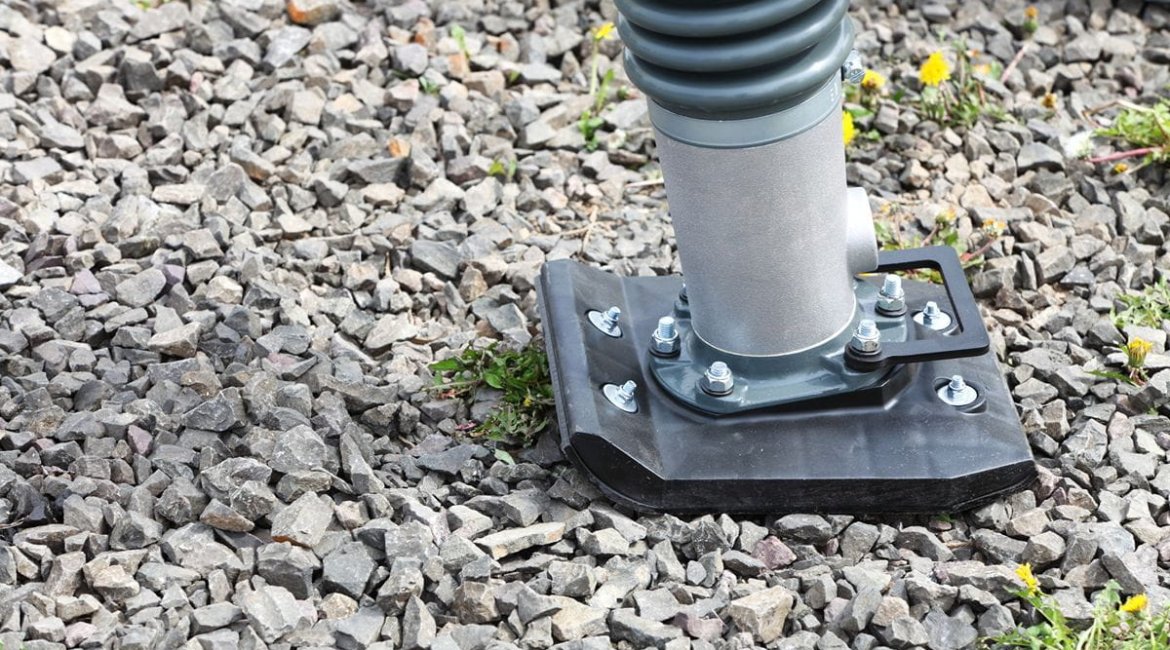
In this article, you’ll learn more about rammers and how they work, but you’ll also learn about the different kinds of soil and site types you’re likely to encounter in South Africa. Understanding these will help you to pick the exact sort of rammers best suited to the individual tasks at hand. Choosing the right kind of rammers for the right kind of jobs is an essential part of any contractor’s job. Not only will it boost productivity and the quality of the final results, but it’ll also help you to avoid costly mistakes or even injuries. This article is brought to you by BS Power, a trusted supplier of top-tier rammers and other quality power tools.
The Right Rammers: The Wrong Tools At Your Own Risk
Rammers aren’t cheap; nobody is denying that. Even entry-level rammers (of any discernible quality) will easily set you back 20K rand, making it a significant investment, especially for smaller contractor businesses. Those that do get their hands on a rammer tend to rely on that sole one for every job, no matter the soil type, trench depth or site access. From a budget perspective, this sounds like a great idea. Why would you need to buy or hire a whole new rammer just because one site has more sandy soil than the other? Unfortunately, using the wrong kind of rammers for any given job can lead to all sorts of complications stemming from failed compaction, leading to serious structural weaknesses down the line and lots of unnecessary rework costs. Using rammers specifically made for the exact sort of terrain you’re working with is the only way to guarantee truly satisfactory compaction work done on your worksite.
The Right Rammers: What Rammers Actually Do (Trust Us, This Matters)
As I’m sure your suspicions have hinted at, rammers ram. However, in more technical terms, this means that they’re a powerful tool with a sturdy foot that moves in the vertical plane, using a motor to send powerful impacts into the ground to force soil, gravel and silt into a more compact state. What sets rammers apart from their other compacting kin is their shape and size– they’re relatively small and narrow, capable of fitting into trenches and pits where larger rammers like the plate rammer could never reach. This single point in particular makes them an utterly irreplaceable tool on the South African worksite.
Without rammers (or the proper use of them) on a worksite, the earth below important structures like foundations and pipes cannot be compacted. This means the ground is capable of bearing less load, eventually shifting and giving way to the weight on it. While shifting soil doesn’t sound like one of the most frightening phenomena, it is one of the leading causes of road failure, pipe collapse and building subsidence in South Africa, making it a serious concern and another key reason why high-quality rammers adapted to their environment are necessary.
The Right Rammers: The Main Types of Rammers and When to Use Each
The rammer market is full of rammers representing different specifications, including horsepower, weight and size. Yet broadly speaking, there are a few main kinds of rammers, primarily divided by power type. On construction sites you’ll mostly see petrol engine rammers being used, prized for their power and mobility.
Diesel rammers are used underground in the mines because they’ve got a non-sparking engine, thus reducing the chances of them triggering a catastrophic explosion in the presence of subterranean gas pockets. There are newer electrical rammers being introduced in the market that are both eco-friendlier and fuel efficient, although tethered by a cord. Battery-powered rammers may not be as powerful but are more mobile than their electric counterparts. Both rammers are still quite limited in South Africa due to factors like limited power on rural and semi-rural worksites and nationwide load shedding.
The Right Rammers: Different Soil, Different Rammer
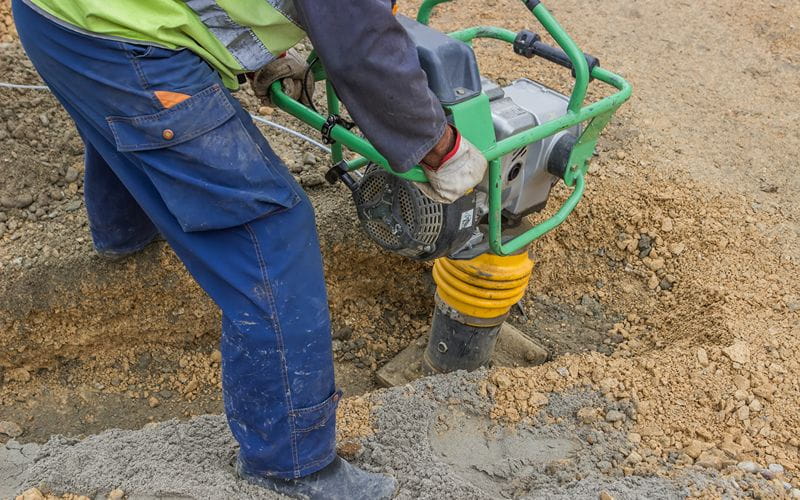
Time for a little geology. There are cohesive soils, and there are semi-cohesive soils. Cohesive soils represent soils with fine-grained material makeup that stick together closely for reasons related to both water retention and electrical charge. Cohesive soils have a thick, plastic texture and are best exemplified by clay. Semi-cohesive soils are a middle ground between cohesive soil and noncohesive soil like sand, the latter category being very loosely held together. As such, there’s some natural cohesion between particles, but the overall structural integrity of semi-cohesive soils is quite dependent on friction.
The reason we mention all of this is that depending on whether you’re working on cohesive or semi-cohesive soil, you’re going to need rammers with different specs. To work with cohesive soil, you’re going to need heavier rammers with a high impact force to have any kind of effect. Go too light, and you’ll leave the work half-done, without even compaction. Semi-cohesive soils compact far more easily, thus requiring lighter rammers to treat. Using rammers that are too heavy or powerful on semi-cohesive soil can actually over-compact it. In general, any material being rammed should be kept slightly moist to help prevent over-compaction.
The Right Rammers: Key Specs to Look at Before You Buy
If you’re going to be buying your own rammers, it’ll be well worth your time to look over a few key stats to select the one best suited to the kind of work you’ve got in mind. The first item on your list is going to be impact force, which will be measured in kN. Next up is the machine’s weight, which the previous section will have made clear is a very important factor to be matched with soil type. The final major point to look out for is engine size, which is going to affect not only power and weight, but also operating speed and longevity. If you want a rammer that’s as close to a generalist tool as possible, look out for a 75-76kg machine with an output of roughly 14kN. These can handle most basic tasks given to South African contractors, like pothole repair and work on light sand and gravel.
Of course, build quality in rammers is something you’re always going to want, no matter the exact application. Keep an eye out for features like dual air filtration, anti-vibration mounts, and sealed bearings– these features are going to boost performance and keep your ram operating in the tough South African outdoor conditions long after your competitors’ cheap rammers have given up.
The Right Rammers: Petrol Rammers and the South African Site, A Match Made in Heaven
If you’re a South African contractor with any experience in the field, you don’t need to be told that conditions are less than favourable most of the time. The South African landscape is often hot, dusty, and rugged. In certain regions, especially the Western Cape, winter seasons are rainy, muddy and windy. Nobody enjoys working in these extreme conditions. That said, they’re also detrimental to a rammer’s lifespan in one way or another. The local market needs rammers of top quality, with durable builds that can withstand environmental pressure. On top of all of that, we also have infamously spotty access to electricity as a result of poor infrastructure in rural and semi-rural areas. Not to mention load shedding.
With South Africa’s recent Infrastructure investment plan, we’re seeing a massive demand for construction to take place in exactly these aforementioned places without reliable access to electricity. If we have any hope of making these plans come into being, we’re going to need powerful petrol rammers. Petrol rammers can start, run and perform totally independently of any power grid, making them perfectly adapted to this scenario. With BS Power’s higher quality petrol rammers also being extra durable against the elements, our rammers are an easy choice.
The Right Rammers: Common Rammer Related Mistakes SA Contractors Make
If you’re looking to make the most of your significant investment into quality rammers, you’re surely going to want to avoid these common mistakes that a lot of South African contractors tend to make surrounding rammers. The first is using rammers on a surface that’s too hard or has already been compacted. This is going to redirect all that vibration right back into the machine and up the arms of the operator. This deals serious damage to both the machine and the poor operator, so should be avoided at all costs.
The second biggest mistake is neglecting the basic but important maintenance tasks that surround rammers. Rammers are robust, but they still require care; clean their air filters, check their fuel levels and bellows, remove excess dirt and store them where the sun, wind and rain can’t get to them.
The third big mistake would be to hire or buy the cheapest rammers available without bothering to check what the kN or weight of the machine is. That’s going to lead to poor compaction and plenty of repeat work, even breakdowns, repairs or replacements. That initial cheapness has now turned into a massive expense down the line, leaving you wishing that you’d invested in better-suited, better-quality rammers instead.
The Right Rammers: BS Power For The Right Rammers
BS Power is a well-established South African supplier of power tools and construction equipment, including rammers of every kind. If you’re looking for the right kind of rammers for whichever work site or soil type, you’re tackling, you’ve certainly come to the right place. We’ve got a wide range meant precisely to encompass all the possible needs of South African contractors working across variable worksites. From lightweight to heavy hitter, we’ve got it all. What remains constant throughout our products, however, is quality. They’re all made from superior materials and intelligent build design, offering their owners not only excellent performance, but also outstanding durability and impressive fuel economy. As if that wasn’t already good enough, all rammers also come with a truly robust warranty and after-sales support service that works to quickly address and amend any mishaps to reduce any lost time in the unlikely event that such a thing occurs.
Conclusion: The Right Rammers Pay For Themselves
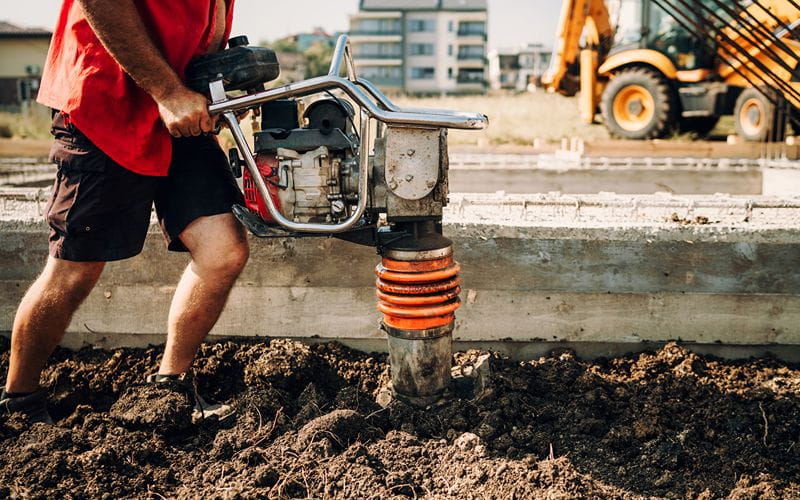
Rather than simply grabbing the cheapest rammers available on the market, choosing the right kind of rammers for the right kind of scenarios is really the kind of decision that pays for itself. However, doing so first requires you to do some research, including not only the specs of the rammers, but also the kind of soil and the terrain of your site.
With so much infrastructure-related construction planned for South Africa right now, you’d be well positioned to make the most of quality rammers suited to the sort of jobs you’re intending to handle. Whether you’re looking for something lighter to handle semi-cohesive soils, or a real heavyweight to take care of cohesive soils, BS Power will have something for you from our selection of top-notch rammers.