




BS Power Tamping Rammers: Compaction Without Distraction
To compact soil and give it a greater load-bearing capacity, tamping rammers don’t need many extra fancy features. Their narrow bodies and powerful engines are more than capable of getting the job done, making them an indispensable asset to a range of South African industries, including construction and landscaping.
If you’re in the market for your own machine, this guide is a great start. You’ll learn more about what they do, how they do it and where to find one. You’ll also leave wiser on how to care for them and get the best prices possible, making this information valuable to anyone serious about construction.
What Does “Rammers” Mean? Understanding the Rammer Machine and Its Uses
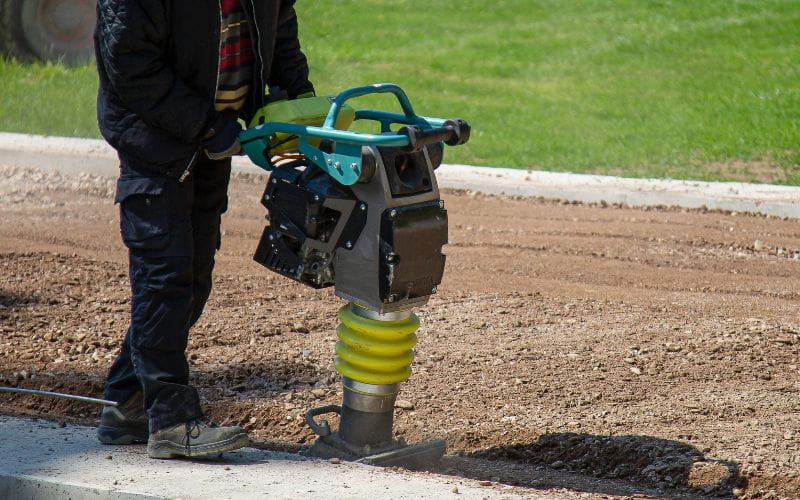
Rammers are a specialised compaction machine used in construction to densify cohesive soil like clay and silt. The rammer machine does this using a narrow foot that stamps down in a vertical motion, allowing it to work in tight spaces where other large compactors can’t fit. They’re an essential tool on construction sites where space is limited, allowing you to remove air gaps in soil and thus increase its load-bearing capacity, even when you can’t utilise something like a large rolling compactor.
They’re fairly straightforward machines that focus more on power than complexity, but that’s not to say there isn’t more information to be gleaned. These machines come in a variety of types and price ranges, and have different uses based on design.
What Is a Rammer Used For? Compaction in Construction, Concrete, and Asphalt
As mentioned above, compacting soil is what these machines do, and they do it well. However, the reason for this compaction is to increase the load-bearing capacity of the ground, preventing mishaps like settling, cracking, and even total structural failure. It’s carried out mostly in trenches, foundations, backfills, and more.
You’re likely benefiting from their use right now: if you’re in a building, the builders (hopefully!) first compacted the ground before pouring concrete slabs for the foundation or preparing a stable floor base in construction projects. The same goes for roads, as asphalt needs to be laid over soil that won’t give way under pressure. Though you’ll also see their use in less construction-centric projects, such as garden landscaping. This speaks to not only the versatility but also the pervasiveness of the use of these powerful machines.
In summary, common uses for tamping rammers include:
- Trench compaction.
- Soil preparation for foundations.
- Roadwork and asphalt support.
- Pipeline and utility work.
- Landscaping projects.
What Is Another Name For A Rammer? Stamper, Rammer Compactor, and More
It could very well be that you’ve seen these machines in use before, but heard them called by another name, perhaps. Some call them a ‘stamper’ or ‘stamper machine’. Others prefer ‘rammer compactor’. They’re even called ‘jumping jacks’ in certain places. This just shows that the naming of this device can vary across regions, suppliers, or even just on a personal basis.
However, all of these names describe the same core tool, although the specifications and thus exact usage are likely to differ somewhat. Knowing that all of these terms ultimately describe the same machine should help to make shopping easier and clear up any confusion regarding the idea that these names all describe distinctive devices rather than one single item.
What Are The Different Types of Tamping Rammers and Power Source Options?
Tamping rammers, while all similar in core function, do in fact differ across various models. The main differentiator is often the power source, which is split into three main categories. Petrol power is the most common and the most powerful, with many models featuring trusted engine types such as rammer robin configurations, prized for their ability to function independently of any electric grid and therefore highly portable. Electric motors are a less powerful but quieter alternative with relatively good fuel economy.
While they’re neither as powerful nor portable as their petrol-run cousins, they’re great for indoor use due to lower noise levels. Battery-powered units are relatively new to the market, celebrated as being the most environmentally-friendly option of the lot. Some machines use pneumatic tamping, which uses air-based systems, primarily utilised in industrial applications, often powered by specialised air tool systems and compressors. Air tools are very valuable in this context.
Tamping Rammers vs Forward Plate Compactors: Choosing the Right Equipment
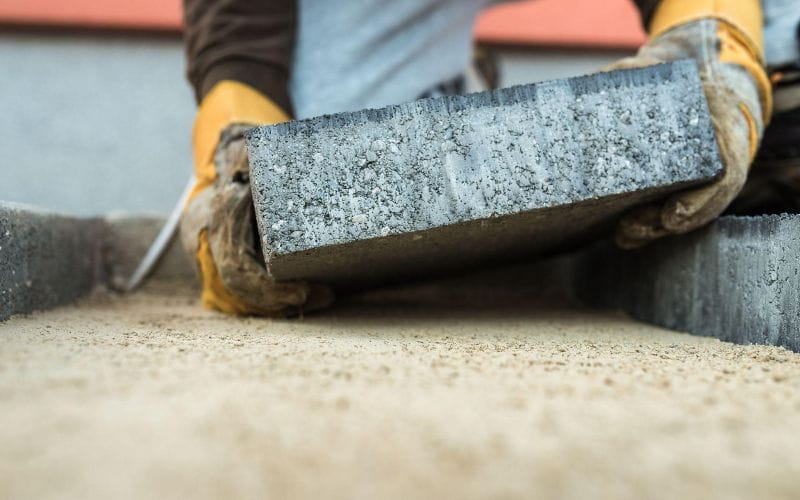
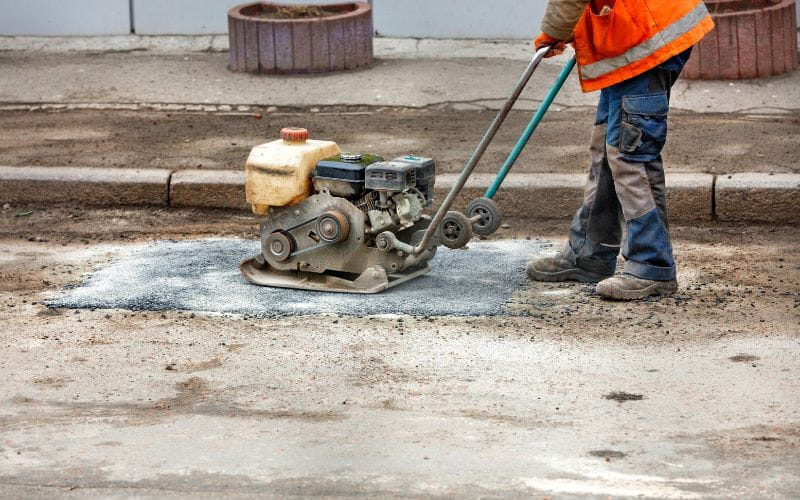
Forward plate compactors are one of the primary alternatives to tamping rammers. Rather than a small, mobile machine that uses a powerful up-and-down motion, this equipment comprises a flat plate that vibrates forward. They’re not as high-impact, and neither can they be used in tight spaces.
Where they excel, however, is in speed and their ability to cover large areas at a time. Therefore, it’s important to clarify that one is not better than the other; both machines are simply suited to different kinds of applications. Before deciding on whether to buy a tamping rammer or a forward plate, we recommend you consider factors like soil type, the nature of the worksite, and the job size before making your purchase.
For those deciding between equipment types, a compactors read like this can help clarify the difference between rammers and plate compactors. BS Power’s customer support will be more than happy to lend their knowledge and assistance to you.
Rammers South Africa: Equipment, Suppliers, and Where to Buy
The rammers South African market is a busy scene, due to the strong demand for these powerful machines coming from the construction industry and other building sectors. In particular, regions like the Western Cape see high demand due to the scale of urban infrastructure. Of course, the many different construction businesses aren’t just relying on one product from one place.
There are many products being introduced into the South African market through nationwide suppliers such as Sino Plant and BS Power. BS Power is a trusted supplier of construction equipment, hand tools and power tools, known for our durable machines, reliable performance, and attentive customer service. We recommend that you browse through our full catalogue of products before making your decision, as we have a large array of devices suited to many different needs.
Rammers For Sale and Tamping Rammer For Hire: Buying vs Renting
It could be that rather than buying, you’re looking for tamping rammers for hire. This could be a very reasonable move if you’re only working on short-term jobs and aren’t likely to use the machine much repeatedly after the completion of that job. It’s definitely a more budget-friendly way of operating for small contractors.
However, if you’re planning to use the machine frequently or have been contracted for a long-term project, it’s likely that you should be looking for rammers for sale. Having this machine in your permanent arsenal won’t just be more convenient; it will almost without a doubt save you money in the long run.
Don’t feel pressure to commit immediately, however. Many contractors will start by renting out tools to begin with, then move on to securing their own once they’ve better established themselves.
Rammers Price and Stamper Machine Price in South Africa
Putting an exact number to rammers price in South Africa is a tough prospect. As mentioned, there are many different models and specifications, which will all greatly influence the final price tag. The primary factors responsible are total engine power, build quality, and the simple association of the brand name.
Although difficult to determine exactly, a realistic estimate for a stamper machine price locally could range anywhere from R12,000 to over R40,000 for the most premium products. You can expect to pay about R20,000 for a mid-market, powerful machine of good quality.
This should be totally acceptable for the average professional contractor, with lower-priced models best suited to smaller contractors and anything more pricey than that best suited to high-level applications, such as important infrastructure.
How to Use and Maintain a Rammer Machine for Long-Term Compaction Performance
Using a rammer machine is technically easy, if somewhat physically challenging. After starting the machine, you’re going to steadily guide it over the target soil area rather than forcing it. The goal is to compact in layers, working methodically to ensure solid compaction. After use, you’re going to thoroughly clean the whole machine to prevent building of dirt, dust, and debris, as this could damage the machine eventually.
If you’re working with a petrol-powered model, you’re going to want to perform fuel and oil checks. Filters should be regularly inspected and replaced if necessary, though you’re going to check the tie instead if you’re using air tools/pneumatic tools. Adhere to these basic usage and maintenance principles, and you’ll be able to enjoy many years of outstanding performance.
Tamping Rammers Applications From Across Industries
Tamping rammers are used for a range of related purposes across a variety of industries, proving themselves as invaluable tools. Some of the most common uses involve roadworks, as they’re used to solidify soil before asphalt is laid on it for roads. The same goes for laying concrete to set foundations, providing buildings with strength from below. Their narrow bodies and portable nature make them uniquely well-adapted to work within trenches and pipelines, flattening soil where larger machines cannot reach.
It’s not all about construction, however. The landscaping industry also uses these tools, especially when working with adhesive soil like clay. Depending on which industry is using the machine, it’s likely that exact models and specifications will vary, as suited to the individual requirements of the situation.
Website Experience, and Staying Informed
If you’d like to stay informed on BS Power products and specials, we recommend checking out our blogs, where you can get fresh updates on featured deals and new arrivals. You’ll find everything available on our online shop on the BS Power website, where equipping yourself with a powerful new piece of construction equipment is as easy as adding it to your cart and checking out. For tailored deals, enable cookies as you browse.
Why We Use Cookies on the BS Power Website
Cookies help improve your browsing experience on the BS Power website by remembering your preferences and tailoring content to your needs. By collecting basic browsing data, cookies allow us to show you relevant products, streamline navigation, and improve the overall site traffic and performance. We’re always stocking more top-notch equipment, and it’s all there waiting for you. Head over today and see if anything meets your needs.
Newsletter Trends and Blogs in the Construction Equipment Industry
In the construction equipment industry, newsletters have become a popular way for professionals to stay informed about new machinery, pricing trends, and technological advancements. Plenty of suppliers use a newsletter, blogs and guides to share insights on equipment performance, maintenance tips, and industry developments, helping contractors to make more informed decisions. Browse through the BS Power blogs to find out more about our range of products, each of which has been designed to answer key questions and offer solid advice.
Conclusion
In conclusion, rammers are a straightforward but effective tool that achieves one thing: compaction without distraction. Working in a powerful up and down motion, their narrow bodies allow them to compress cohesive soil in areas where their broader ilk can’t reach. They’re an essential tool in the construction and landscaping industry, where they help to support the structural integrity of roads, buildings, and infrastructure projects.
You’ll find them called by many names and represented by a range of models, coming in at prices that range from as little as 12K to over 40K. When shopping at BS Power, you’ll have access to a wealth of options and the potential for guidance from our trained customer support service. Our products are designed to have a long life span. Browse our online store today to catch the latest deals on top-quality construction equipment and power tools.
Frequently Asked Questions (FAQ)
Let’s look at a few frequently asked questions surrounding rammers.
What are the different types of rammers?
The main types include petrol-powered, electric, battery-powered, and pneumatic rammers, each suited to different working environments and power needs.
Can a tamping rammer be used on all soil types?
Tamping rammers work best on cohesive soils like clay and slit, but are less effective on loose, granular soils like sand.
How often should a rammer be maintained?
Regular maintenance should be done after each use, with more thorough checks on oil, filters, and components performed periodically.
Is it better to buy or hire a tamping rammer?
Hiring is ideal for short-term or occasional use, while buying is better and more cost-effective for frequent or long-term projects