




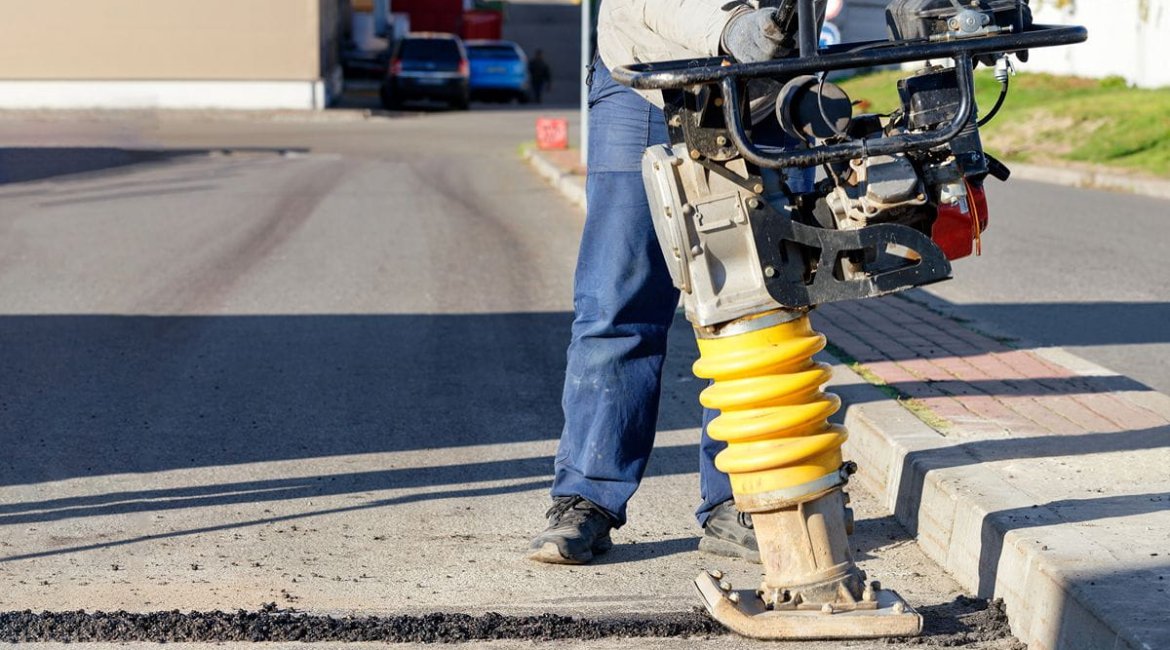
A petrol rammer performs only as well as the checks you do before starting. You should spend at least five minutes doing checks before running a job with our rammers, as every job with one of our models needs pre-engine checks. While BS Power produces petrol rammers for tasks like trench infill, pipe bedding, and pathway compaction, it is essential that even good machines are maintained through a practice of job-anticipation checks. In this article, we give you a clear list of what to inspect on your rammers before every use. This will help you safeguard your property, ensure the safety of your crew, and also eliminate those types of delays that stop worksite operations.
Why Petrol Rammers Need A Pre-Job Check Every Time
Petrol compactors function amidst severe challenges. Each cycle causes the plate, guide rods, crankcase, as well as engine mounts to vibrate. It is these same shocks that can undo fasteners and wear parts more rapidly than any other piece of compaction machinery. If you skip the daily visual walk-around inspection on a petrol compactor, the little problems like a loose bolt or running low on oil can become more serious problems like stalled engines, cracked plates, or bent rods.
Most likely, you already know that a broken-down rammer will not only waste your labour efforts but also the money that you save by skipping regular maintenance. That means every engine start-up is an important occasion where you might find a minor fault. Petrol compactors have much longer lifespans with a regular service routine, including pre-job checks. Habitual performance of a routine by you and your team who operate the machine every morning is the most significant determinant of the lifetime of your rammers.
Consider the start-of-job inspection in five very quick steps: fuel & oil filter, crushing device of your machine, bolt and frame, and an engine test run. These do not take longer to do after you have made them a habit, and altogether they give you better safety and increased productivity. Below, we discuss each part in full, based on the checklist our technician uses.
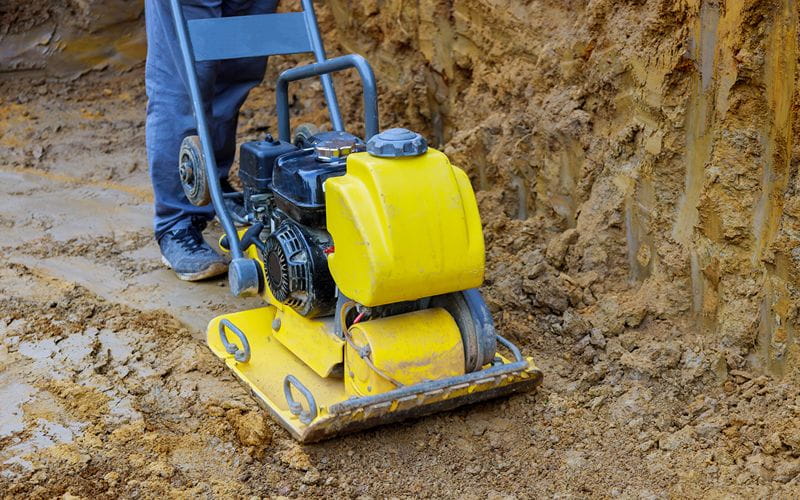
Fuel, Oil, And Fluid Levels
Always start your session by checking the level of petrol in the tank. Rammers run on unleaded, and old and dirty fuel is one of the most common causes of a blocked or non-starting machine. If you have not used the machine for more than a month, drain out the old fuel and replace it with fresh unleaded before you turn on the ignition. Do not top up with petrol while the engine is hot and always check that the seal around the fuel cap is intact and secure, as dust or water can enter and will quickly block the carburettor.
Then, take out the dipstick and check again to ensure that the oil is at the correct level but not dark or gritty. Four-stroke engines on rammers rely on clean oil to lubricate the crankshaft and con-rod, and a lack of oil is one of the first and simplest steps towards seizing an engine that had years of life left in it.
The main engines used on our rammers use less than a litre of oil. Not getting enough oil in the crankcase, even for a short period of time, can occur. If your petrol rammer is coming to an interval, it should not be used again until an on-site service. Change the oil before you need to use it again.
Air Filter And Cooling Checks
The main enemy of small engines in the construction world is dust, and rammers spend a lot of time raising dust, which is exactly the sort of stuff that the engine does not like. Before you start the motor, remove the housing of the air filter and have a close look at the air filter for clogging or damage, as a dirty air filter cuts off the oxygen supply to the engine. A clogged or dirty air filter often results in poor operation. This can easily occur, causing the machine to become weaker in power and eventually causing the spark plug to go bad. On our side, we produce rammers that have air filtration systems which consider the kind of site dust that this kind of work generates. But even a good air filter should occasionally be shaken or replaced so the air it filters in continues to be clean.
Another point to look after is the cooling fins behind the cylinder head, which could be clogged up and restrict the passage of air, resulting in the cylinder becoming very hot. In a petrol rammer, the loss of power due to an overheated engine would happen fast, and after many such occasions will lead to the deterioration of the piston rings and valve seats.

Baseplate, Guide Rods, And Fasteners
The baseplate endures the full extent of the blows of the ramming action of your petrol rammer. You will need to examine it closely to see whether the plate has any cracks, or if it is deformed or badly worn on its leading edge. If a plate has cracks, it will transmit vibrations unevenly, which leads to faster wearing of the guide rods above it and the reduced amount of compaction energy getting delivered to the soil. Should you see the plate bend or hear a noise which has not been there before running the machine on a job, you should turn off the engine and investigate the matter instead. Bending of sections and broken welds or too much wear should be checked visually in the guide rods and the spring components that control the ramming.
These ramming components undergo heavy cyclic stressing, as petrol compactors can hit the ground rapidly hundreds of times per minute, and weak areas will be exposed under such repetitive operating conditions. Therefore, it is of the utmost importance to ensure that the guide rods are always well lubricated. Lubricating the guide rods regularly with proper oil on schedule is important, as dry rods wear much faster and vibration is conveyed through the handlebars to the machine operator to a greater degree.
After completing your day’s work, it is best to thoroughly clean the baseplate and housing to eliminate any traces of wet concrete, clay, or cement before it dries and hardens on the metal surface. The process of cleaning from the hardened residue is definitely a lot more difficult. It may cover the appearance of new cracks or corrosion on the plate surface itself.
If your petrol rammers are not going to be used for an extended time, empty the fuel tank or put a stabiliser in the gasoline, because old fuel stored in the carburettor is usually what makes the engine difficult to start. A dry and cool environment is the ideal option for storing the machine. The reason behind this is that UV light and moisture contribute to the early degradation of rubber seals, fuel lines, and gaskets.
Maintaining A Rammer From BS Power
Different jobs are of different weight classes, and aligning your petrol rammers with the task will make the equipment work less and deliver improved results. Our Baumax 76kg with Honda Engine Rammer model is built around a Honda GXR120 engine and provides you with an impact force of 15kN, giving a stroke of 50 to 80mm. This model is particularly good when you must do deeper compaction work, like trench backfill or foundation preparation, where the machine will speed up the process. In addition, you get a self-contained air filtration unit to clean the air, and 2 Liters worth of fuel to keep you going, while a 345 x 285mm plate can work with any kind of trench width.
If the job you want to perform is not too heavy or the space you have for a machine is not noticeably big, we recommend our Baumax RM60R 65kg Rammer. This powerful machine will be a great companion, helping you tackle tough jobs while delivering excellent results. The machine is powered by a RATO RM120-V engine and is equipped with a 345 x 265mm plate.
Both petrol rammers can be considered commercial-grade equipment for daily use in a harsh environment as they are built to last and yet are quite easy and convenient to service. Choosing the correct type of machine for a particular job not only reduces your effort but also reduces the number of passes to reach the compaction level that you are looking for.
Rammers are most beneficial for operators who treat maintenance as part of the job, not an afterthought added when something has already gone wrong. The operator who regularly spends just 5 minutes looking at the fuel oil, the air filter, the baseplate, and the fasteners will detect most of the malfunctions right before they start to cost time or money offsite. Petrol rammers from BS Power are developed under strict standards, and the company not only supplies spare parts but is also very initiative-taking with technical support. This way ensures you never face machine downtime for extended periods due to spare parts or maintenance.