




A concrete mixer can help you to complete your projects faster and with better results, while also saving you resources, labour and costs. This simple device may not be particularly flashy in its function, but it’s an essential piece of construction equipment for any professional contractor or passionate homeowner. This article will go on to explore the ways in which mixer designs maximise output based on minimal input.
A Straightforward But Important Role
The role of the concrete mixer on the work site isn’t a particularly complex one, but it certainly is an important one. The job of this study machine is to take the separate components of concrete– being cement mix, water, and aggregates such as gravel or sand– and blend them into a uniform mix.
Together, these ingredients can be very heavy, so it requires no small amount of force and endurance to churn them together with satisfying results. Once successfully blended, the resulting concrete can be used for any number of purposes, from laying foundations to making pot planters.
We rely on the power of the mixer to ensure that this is a smooth and uniform blend that results in a high-quality concrete mix. Nobody would argue the fundamental importance of concrete and cement, which are used in virtually every aspect of our infrastructure, including workspaces and living spaces. Without mixers, we would not have the capacity to build as quickly, efficiently or safely as we currently do, making them a true unsung hero of the modern human landscape. We hope that by supporting the proliferation and innovation of high-quality mixers, we can contribute to the steadily improving standard of construction.
How A Concrete Mixer Minimises Operational Costs
Cement is an unavoidable necessity of almost every single construction project. Knowing this, no contractor begins their work without reliable access to concrete. Some contractors and individuals have access to a mixer of their own, which they’ll bring along to help complete the job. Yet the upfront investment associated with purchasing a mixer can be daunting to some, prompting a search for alternative methods.
What many choose to rely on is purchasing pre-mixed concrete from a specialised business, which will see to the delivery. It can be a convenient and more cost-effective option for those who only need concrete on rare occasions, but in the construction business, it’s rare not to need concrete. Over time, the cost of making repeated orders adds up (and it does so quickly), eventually overshadowing the upfront cost of purchasing your own mixer.
If you have your own mixer that you can use for your projects, you won’t have to pay any additional charges for concrete production or cover the fees associated with the transport thereof. There also comes the additional benefit of flexibility; with ordering concrete, you’ll have to specify an amount and receive exactly that much. If that ends up being an insufficient amount of concrete for the intended project, you’ll be forced to make another order, which can be particularly frustrating if it’s only a small amount.
However, if you have your own mixer, you’d simply be able to create that little extra yourself. You’ll see that in the long run, having a mixer of your own is a far more economical choice than relying on ordering from an outside supplier.
The Labour-Saving Benefits Of A Concrete Mixer
Some of the most dramatic savings granted to you by a concrete mixer come in the form of minimising labour. Before we had mixers, it was up to the work of human hands to mix concrete. In large pits or troughs, groups of labourers would wrestle sturdy hand tools through the gritty mix of water, cement powder and aggregates. This process took an immense amount of effort from everyone involved, not to mention time, too. Yet the results of doing things the old-fashioned way aren’t always reliable, often leading to leftover clumps of unmixed ingredients and an inconsistent blend.
To use concrete like this is to risk the structural integrity of the project, forcing the team to throw out the batch and start anew. With a mixer, all of these concerns all but disappear. These machines perform the work of entire teams of labourers, albeit much faster and with more consistent results. From a contractor’s point of view, this frees up those labourers who would have been spent mixing concrete to go work on other tasks, which helps speed up the progress of the entire project. This means faster results, better rapport and more business for you.
However, for sole individuals or small teams working on simple builds and passion projects, the labour-saving component can be equally beneficial. It allows you to complete your project even if you don’t have the available labour needed to mix concrete by hand.
Using Your Resources Wisely
One of the primary disadvantages of mixing concrete by hand is the inconsistent results of doing so. Whole batches can be ruined by sections of unmixed ingredients and lingering clumps, which make the final product unusable. More than simply wasting a lot of time and effort, this also represents a major waste of resources and cost.
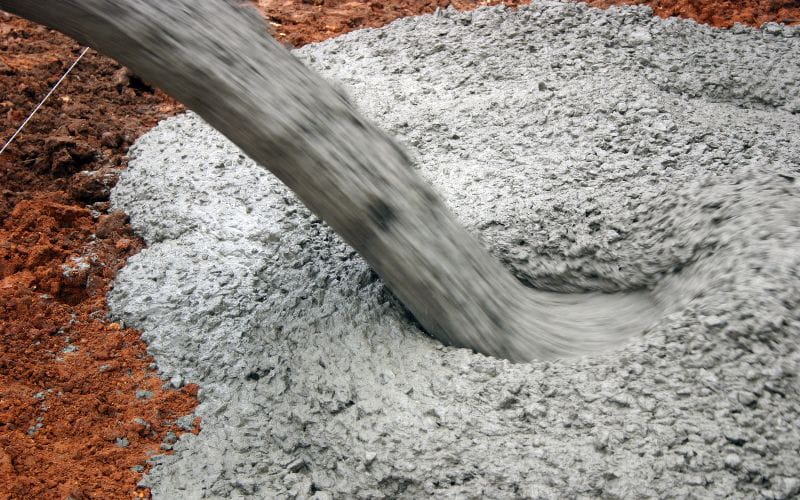
Fortunately, the modern mixer can help you to make this kind of wastage a thing of the past. The powerful and regular churn of the drum ensures a smooth and even blend that leaves no clumps or inconsistencies. As long as the ingredients have been added in the right proportions and order (water first, then cement powder, followed by sand, then aggregates, and finally finish off with the remainder of the water), you should almost always receive a batch of high-quality blended concrete. With results like this, you’ll never have to waste a batch of concrete.
Standout Fuel Economy From Concrete Mixers
Fuel economy is an incredibly important variable in any kind of device but becomes particularly salient if it’s one that’s used frequently. For professional contractors, a concrete mixer definitely qualifies as a device that’s used frequently. If the fuel cost of a mixer is high, this cost will add up quickly and come to represent a major operational cost.
Even if you’re just a passionate homeowner intending to use a mixer every now and then, fuel economy will still matter, especially because you don’t have the same resources to invest in your equipment as professionals do. That’s why BS Power selects concrete mixers known for their fuel economy to supply the South African market with.
Our petrol-powered concrete mixers make the most of every drop of fuel they’re given, providing you with fuel economy that doesn’t come at the expense of performance. Alternatively, we do offer a range of electric concrete mixers that bring fuel economy to the next level. These modern mixers might not be quite as powerful as their fuel-based counterparts, but they’re perfect for small-scale use. Rather than relying on petrol as a fuel source, they need to be plugged into an electrical source to run. While this still comes at some fuel cost in the form of spent electricity, the total costs are much lower than relying on petrol.
It’s a popular choice among users who are conscientious about the environmental impact of their construction projects, as electric mixers use fewer natural resources and contribute to fewer emissions. As an additional bonus, their electric motors are far quieter than petrol motors, making them easier to work with.
While a mixer can run using relatively few inputs, there are still a number of items and elements you’re going to need to produce any kind of satisfactory results. Ensure that you’ve covered these basics, and you’ll be all set to begin your project.
To produce concrete using a mixer, you are going to require a number of relevant ingredients. These include cement mix, water, sand, and some kind of aggregate– usually gravel or stone. You’re going to need to add these in careful order. Water goes first, followed by the cement powder. Let it sit for about 30 seconds to form a paste before adding the sand. Thereafter, you can add the aggregates of your choice. Finally, you can add what water remains. This will then be churned by the machine, resulting in an evenly blended mixture that comes out as usable concrete.
For such a robust machine to operate, you’re going to need a steady supply of power. If you have an electric mixer, it’s going to be as simple as plugging the device into the nearest electrical source. While the cords for electric mixers are long, you’re still going to be tethered to that location. In the instance that you’re operating on a remote site where there’s no electricity, you’re better off relying on a petrol mixer. With these, you can operate with absolute independence from any electric grid, with no cord to limit you to any particular location.
Fortunately, the labour involved in operating a mixer is minimal, especially with the most modern machines. Some older concrete mixers still have a hand crank that needs to be turned to function, multiplying the effectiveness of a labourer’s force but still requiring it. With modern mixers, however, an electric or petrol motor takes care of that part. All that’s required from human hands is the act of loading the requisite ingredients into the drum and thereafter carting away the concrete once it’s discharged. The most cutting-edge mixers make even this obsolete, having pre-programmed functions that allow them to automatically load ingredients according to the right ratios.
Utilising a mixer takes some measure of preparation to ensure safe and effective outcomes. The mixer itself will have to be examined for any signs of damage or malfunction, including cracks in the drum, erosion along the frame or loose screws. If issues like this are identified, they’re best addressed before allowing operation. The workspace will also need to be prepped, checking for level ground and a large enough area clear of any tripping hazards.

Conclusion
In conclusion, a concrete mixer is designed for efficiency. It is made to provide you with outstanding results in a short period of time, without costing you significantly in terms of labour, fuel or resources. BS Power refines this principle, providing the South African market with a range of top-performing mixers that meet a range of needs but universally provide you with maximum results for minimal input. As long as you have access to some resources, power, labour and a prepared space to work in, you’ll be able to utilise a BS Power mixer to incredible results.