





Construction and building equipment, such as concrete mixers, are among the most essential pieces in any plant hire business. Plant rental businesses work in a challenging area of the building sector, where rental companies give their machines to several operators on various job sites in different conditions, as opposed to contractors who own and operate their equipment in-house.
Concrete mixers are assets that generate revenue and must endure frequent use, stressful transportation, and little oversight, which means they need to be durable and reliable. Purchasing a concrete mixer is a strategic business choice for rental companies. Their decision is based on serviceability, durability and a return on investment.
The concrete mixers owned by hire plants typically see more hours worked than the average mixer. Naturally, this is due to the many projects carried out with the same machine. As a result, they have higher wear rates than owner-operated equipment. Contractors who use their own mixers usually train their workers carefully and closely monitor performance, servicing and maintaining the machine to extend its service life. In contrast, hired equipment is often not given the same attention, and machines are expected to be in optimal working conditions when hired from the plant.
Conversely, rental customers might value speed over caution. Machines are often moved, placed on rough ground, and then returned with little to no cleaning. Structured maintenance systems and lifecycle planning are crucial for lowering equipment risk and operating costs, according to research on construction equipment management published through ScienceDirect. The same rules apply to rental businesses, although the level of use necessitates even stricter equipment selection standards.
The Rental Equipment Environment
Private ownership and rental conditions are very different. Concrete and cement mixers, which belong to rental plants, are subjected to a greater variety of user behaviours and may run continuously for extended periods of time. Job sites might not have the best working surfaces, and operators may have different training. These elements raise the possibility of misuse and hasten wear.
Hire companies cannot control how equipment is treated on site, which is why mixers must compensate through engineering strength and simplified servicing. The environment is unpredictable, so equipment reliability becomes the first defence against revenue loss.
Durability As The Foundation Of Profitability
Any purchase decision must be based on durability. The most important part of concrete mixers is the drum, which is under tremendous strain during rental conditions. The internal steel surface is constantly ground against by aggregates. Abrasion is accelerated by hardened cement when renters neglect to clean the area.
For rental use, high-quality concrete and cement mixers should have reinforced edges and heavy-gauge steel drums. The initial purchase price may be lowered by inferior drum construction, but profitability will be rapidly undermined by ongoing repair or replacement expenses.
Rental companies should carefully consider the structural frame of the mixer, since rental equipment is frequently moved around and towed. Structural fatigue easily occurs when the mixer’s chassis is under stress. The chassis will experience stress when the mixer is operated on uneven work sites or from vibration during transportation. Structural frames should be powder-coated or galvanised to prevent corrosion. A concrete mixer with strengthened tow bars and solid axles will have more stability during transport.
Industry commentary in publications such as Construction Equipment Magazine emphasises lifecycle cost and structural integrity as major considerations in fleet selection. Durable mixers must withstand constant relocation without frame misalignment.
Designing For Abuse Resistance
Hire companies will assume that contractors or operators will overload and misuse equipment, which is why rental companies select very specific models designed to withstand and endure while in operation. Engine protection is a very important factor to consider. Petrol and diesel-powered concrete and cement mixers are exposed to inconsistent fuel quality and dust.
Firstly, machine systems should have engine guards and reinforced air filtration systems to reduce dust and debris from entering fuel lines and interfering with electrical components. Machines with strong guards and engine components are less likely to experience mechanical failure.
Secondly, rental companies should consider the mixers’ bearing and gearbox system, which also requires protection. Cement residue often hardens around gears and moving components, accelerating wear and creating mechanical strain. This can be prevented and managed by sealing or enclosing bearings. Durable component design and preventative servicing will reduce unexpected failures. Failures lead to downtime, and downtime directly affects revenue for rental businesses.
Thirdly, businesses should consider the machine’s serviceability and rapid turnaround. A machine’s serviceability will determine how quickly a concrete mixer can return to circulation after repair, maintenance and inspection have taken place. The speed at which a machine returns to circulation directly impacts revenue.
An element which can affect machine turnaround is the availability of spare parts. Concrete and cement mixers that rely on standardised bearings and belts allow rental companies to source components quickly. Spare parts and their availability can drastically affect lifestyle costs. Logistics is central to the costs of maintenance.
Lifecycle Planning And Operational Efficiency
Professional management of rental equipment is highly dependent on preventative maintenance. Rental companies that manage oil changes, drum inspections and electrical checks based on operating hours can extend equipment reliability. Regular maintenance will reduce failure rates and long-term costs.
Rental businesses can monitor how many hours every concrete mixer has worked through digital tracking systems. This will allow them to schedule services in advance, minimising waiting time. Hire companies can spot wear and fix issues before they become serious.
Rental businesses should consider the fuel efficiency, engine reliability and the effects they have on rental value. Customers will typically look at running costs before selecting equipment. Mixers that use too much fuel or break down often will lead to unhappy customers and fewer repeat rentals.
Rental companies have higher success rates when they invest in trusted engine brands with reasonable fuel consumption. Quality machinery will also meet current emission standards and operational efficiency. Efficiency lowers costs, keeping concrete and cement mixers competitive in a changing market. Rental companies that invest in efficient concrete mixers position themselves ahead of regulatory and market shifts.
Concrete and cement mixers from rental companies are frequently moving between job sites, requiring stability during transport. Machines should have balanced weight distribution and secure drum locking mechanisms to reduce the chances of tipping. Reinforced towing can prevent structural damage during relocation. Portable models are preferred as long as durability is not compromised. Rental businesses usually prioritise equipment structural strengths with manoeuvrability.
A customer’s experience will influence wear patterns and long-term reliability of the machine. Rental businesses should always provide customers with clear operating guidelines, outlining maintenance responsibilities within the rental agreement. By offering technical support, they can encourage customers to handle machines responsibly. Businesses with transparent communication will strengthen trust and prevent disputes.
Clients who are well supported are more likely to return rental equipment in better condition and choose the same hire provider for other projects. The upfront cost should not solely determine the investment decision. The total costs of ownership include maintenance expenditure, resale value and acquisition costs.
Equipment durability outweighs the initial savings when calculated over several years. Investing in a concrete mixer with higher upfront costs but stronger construction will generate better long-term results. These machines typically experience fewer breakdowns and service interruptions.
BS Power: The Different Concrete And Cement Mixers We Stock
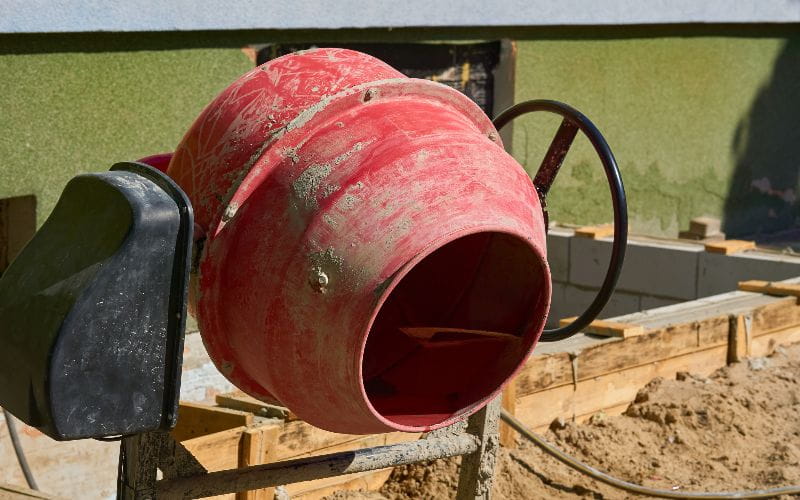
At BS Power, we stock the 360L Concrete Mixer with Baumax Engine. This mixer is typically recommended as an entry-to-mid-range site unit. These mixers offer hire companies a balance between portability and output. They are well-suited to residential contractors and small builders who need reliable concrete and cement mixers without the bulk of a large industrial drum. In rental environments, this size is one of the most frequently hired units because it is manageable to tow and easy to operate.
Moving up in capacity, the 400L Concrete Mixer with Baumax Engine represents one of the most versatile categories in the concrete and cement mixers market. Four-hundred-litre concrete and cement mixers are commonly regarded as the “workhorse” of the hire industry. These mixers provide sufficient drum volume for medium-scale jobs such as foundations and structural footings. They are ideally transportable for mobile contractors, easily moved from and to sites.
The 400L concrete mixers offer performance and affordability, which helps hire companies maximise utilisation rates across the fleet. Rental businesses that target higher-end contractors should consider the 400L Concrete Mixer with Honda Engine. This mixer’s engine quality is a significant factor in the longevity of concrete and cement mixers. Honda-powered mixers are known for their fuel efficiency and consistent starting performance.
As a rental business, this machine with a premium engine justifies higher rental rates. The 420L Concrete Mixer with Baumax Engine has a slight increase in capacity, ideal for contractors who want to mix larger batches without paying higher rates for the 500L. Stocking 420L concrete and cement mixers will allow rental companies to service customers whose projects are just beyond the comfortable limits of a 400L unit but do not justify the operational costs of a much larger machine.
Similarly, the Honda-powered 420L concrete mixer is regarded as having a mid-range capacity and high power. Concrete and cement mixers in this configuration are more resilient for rental fleets working in demanding industries like infrastructure support. Customer’s confidence can also be increased, recognising a well-known engine brand, especially among professional contractors who are aware of the benefits of quality concrete mixer components.
Concrete and cement mixers chosen for rental companies must withstand frequent transportation, a wide range of operators, heavy use, and little supervision. Durability safeguards the asset. Misuse is lessened by abuse resistance. Downtime is decreased by serviceability. Profitability is protected by preventive maintenance.
Hiring companies should evaluate concrete and cement mixers by considering these individual factors. By considering all aspects, rental businesses can build resilient fleets capable of generating consistent returns. In competitive rental markets, reliability determines reputation. For more information on BS Power’s selection of concrete mixers, visit the BS Power website. Investing in quality, service-friendly concrete mixers is part of a long-term business strategy designed to strengthen revenue and generate repeat customers.