




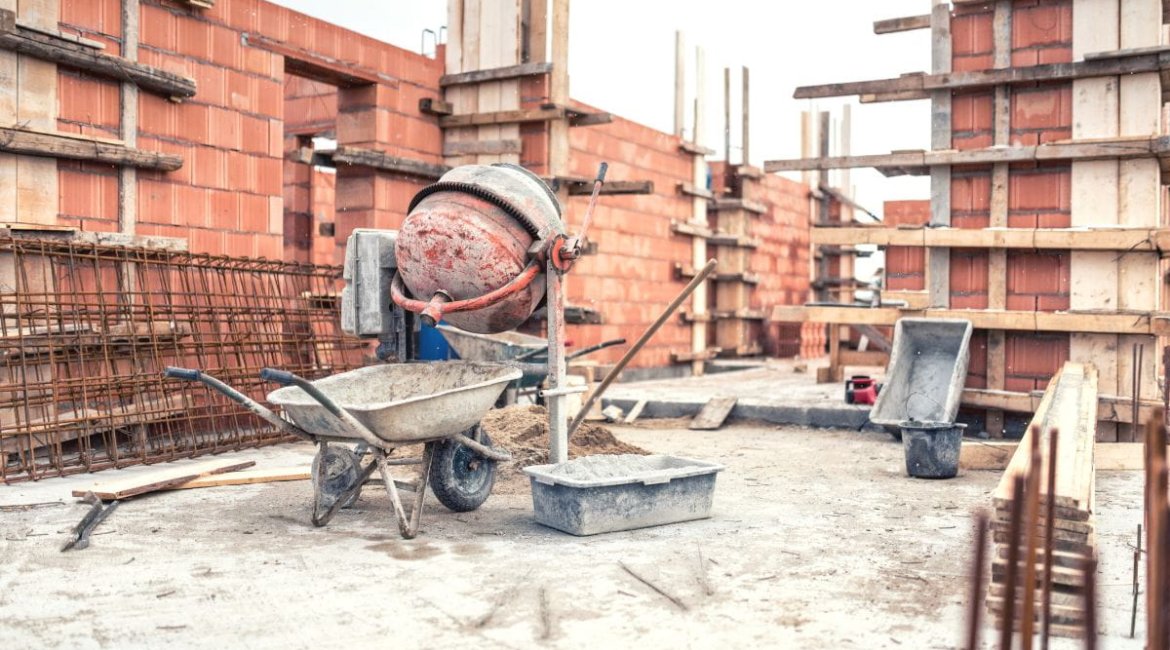
Cement mixers, the often-overlooked workhorse of construction sites. A single piece of equipment which directly influences how efficiently teams operate and how much physical strain workers endure. For that reason, a workforce can only be as productive as its equipment allows. The construction industry, to nobody’s surprise, can be unforgiving, where tight margins and strict deadlines can make or break the success of a project.
The relationship between team efficiency and cement mixers cannot be ignored. Their size, power, reliability and output capacity determine whether a team moves at a productive steady rhythm or spends hours waiting on batch mixing or correcting errors. Equipment like the cement mixer is of great importance to a team, but only when correctly matched to project requirements. When a mixer is correctly implemented into the pace of building, workforce strain is alleviated, and productivity follows.
In this guide, we will discuss the impact cement and concrete mixers have on labour allocation and productivity on site. We will touch on topics such as drum capacity, mobility and reliability of BS Power mixers and cover how a strategic investment will transform on-site performance.
The Productivity Challenge In Construction
The productivity on construction sites has been questioned and has been under pressure for decades. In the United Kingdom, industry experts contributing to the RICS Construction Journal have highlighted the ongoing labour constraints within the sector. Productivity gaps and efficiency are increasingly questioned to determine whether projects remain on schedule and within budget.
European construction teams lose thousands of productive hours annually due to inefficiencies and equipment-related delays. Even small daily interruptions can add up significantly over the course of a project. Since concrete work often lies on the critical path, any inefficiency in mixing operations can cause delays to tasks. Construction sites in South Africa face similar constraints, if not more.
If you are in the construction industry, you would have experienced some of these inefficiencies, witnessing the direct impact they have on project costs.
Cement and concrete mixers, therefore, play a big role in maintaining project efficiency. When mixers operate reliably and at the right capacity, labour can be allocated strategically to aid in productivity. Conversely, if mixers are undersized or unreliable, the resulting productivity losses can affect your entire construction site and cause unwanted delays.
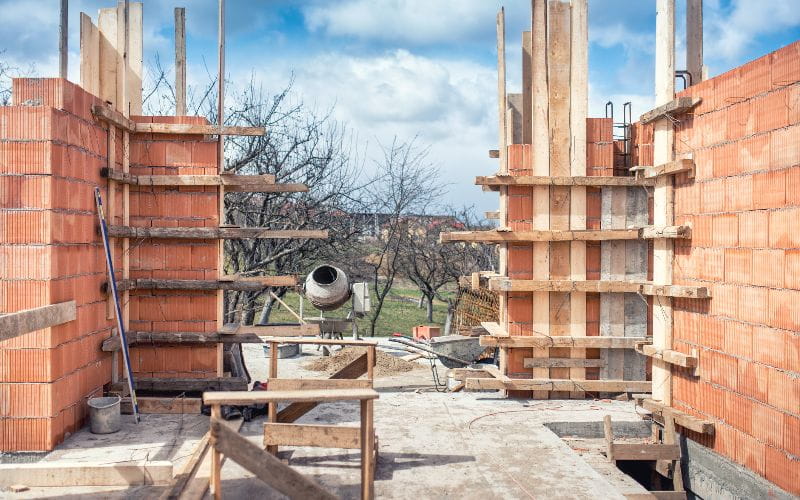
Labour Allocation And Equipment Capacity: The Building Blocks Of Site Productivity
Distributing the workload of your workers evenly will maximise output, reducing wasted time and effort. Allocation of tasks is directly impacted by the efficiency and durability of your cement or concrete mixers. Your workflow will alter on sites with properly sized cement mixers. Instead of continuously switching between mixing, transporting, and placing concrete, workers can be assigned to specialised roles. This structure facilitates increased daily output, improves rhythm, and lessens confusion on site.
Efficient cement and concrete mixers allow you or other supervisors to plan labour with confidence. Instead of reacting to equipment limitations, you can structure teams around predictable output rates. Over time, this predictability will improve cost control and scheduling accuracy, helping you meet important deadlines.
Reducing Workforce Strain Through Correct Equipment Selection
One of the biggest safety hazards in construction is manual handling of cement. The UK Health and Safety Executive highlights that long-term injuries and musculoskeletal disorders are largely caused by repetitive lifting and handling activities (HSE Manual Handling Guidance). Because more batches are needed to meet volume targets, smaller or underperforming cement mixers increase the frequency of manual handling.
If you utilise higher-capacity cement and concrete mixers on site, your workers will require fewer batches, reducing the repetitive strain of lifting and handling materials. Your cement mixer works as a preventative measure in health and safety. Investing in a cement mixer will not only boost productivity but also protect your workforce.
Idle Time And The Cost Of Inefficiency
Idle time is one of the least visible but most damaging productivity drains in construction. Workers who wait on equipment are still paid even though no progress is made. If your cement mixer is too small, your workers will have to wait around during mixing cycles, waiting for the batch to be completed before carrying on with work. Try to minimise this wasted time by introducing mixers with larger mixing capacities. Larger batches will keep your workers busy and minimise the waiting time.
Small and frequent batch cycles can lead to the engine overheating. For this reason, your mixer will need to be durable and reliable, avoiding any breakdowns. The entire site’s productivity will be affected during a breakdown, forced to wait or manually mix concrete until the machine is up and running again. You can easily avoid this by investing in the right size mixer for your project size and maintaining the machine, ensuring its reliability during production.
One of the most common mistakes project managers make is not matching equipment capacity with project size. If you want consistent output, your cement mixer must match your daily volume requirements. A unit with a moderate capacity may be sufficient for smaller residential projects.
However, when working on larger residential projects or even commercial projects, you will need a larger mixer to prevent workers from compensating by working longer hours or exerting more physical effort. The cost of wages, when calculated in events like these, far exceeds the initial upfront investment of an appropriately sized mixer.
As a project manager, you should assess the required cubic metre output per day and compare this with the cycle rate and drum size of available cement mixers. This simple evaluation often reveals whether equipment is limiting performance or aiding in productivity.
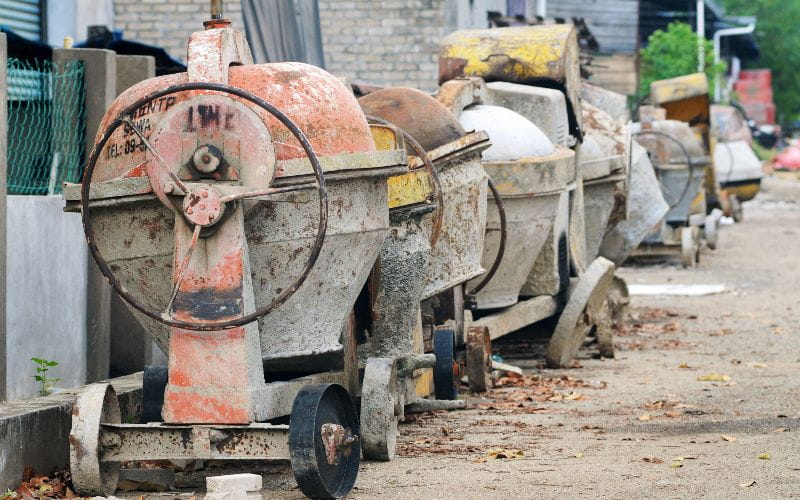
Cement And Concrete Mixers Available From BS Power
At BS Power, we offer high-quality cement and concrete mixers engineered to improve efficiency and reliability on demanding construction sites. Two notable options are the 400L Concrete Mixer with Honda engine and the 360L Concrete Mixer with Baumax engine.
The 400L Concrete Mixer with Honda engine, an impressive machine, provides high-capacity mixing. This reduces batch cycles for your team, shortening waiting periods between pours. This mixer is supported by a widely respected engine brand known for durability and consistent power delivery, particularly suitable for contractors managing larger pours or extended daily operation schedules.
The 360L Concrete Mixer with Baumax engine, a reliable mixer with slightly lower capacity than the 400L, can still deliver excellent performance. It is well-suited to medium-scale operations where reliable output and manageable fuel consumption are priorities. This mixer is a practical choice if you’re interested in upgrading to a larger model without overextending your budget. Both models will improve labour allocation by reducing frequent cycles.
Equipment Reliability And Academic Research
Academic research examining construction equipment productivity proves that reliability is a core determinant of performance. Studies published in journals indexed by ScienceDirect emphasise that equipment failure rates and operational consistency directly influence productivity outcomes and project success.
If your cement mixer fails, workers need to quickly be reassigned to temporary tasks. If your mixer has frequent minor breakdowns, it will lead to irregular workflow patterns that are difficult to manage. A reliable cement mixer can stabilise the whole operation, allowing your team to maintain steady cycles, supporting structured labour distribution and predictable daily output. This consistency, over time, will enhance your profit margins and strengthen your control over the project’s success.
A high-volume cement mixer will enable one operator to manage mixing, while the others focus on transporting concrete and the others focus on placement. With this method, you can expect a steady workflow while reducing cognitive load and physical strain. Your workers will become more efficient in their specialised roles, leading to improved work quality.
A mixer which allows for larger batches will make this work model possible. A structured workflow on-site will improve accountability, allowing supervisors to measure productivity at every stage of the building process rather than addressing cross-task interruptions caused by limited mixing capacity.
Equipment Investment Versus Expanding Labour
According to the RICS Construction Journal, labour shortages remain a persistent concern in construction. As mentioned, hiring additional workers is not always feasible or cost-effective, having a great impact on the overall project costs. In many cases, upgrading your cement mixer will yield quantifiable returns without hiring more workers or paying overtime.
It will be easier to estimate how long a pour will take if you have reliable cement mixers with the right capacity, allowing you to plan ahead. Reliable equipment will cut down rushed pours, saving you the expense of correcting costly errors. Consistent mixing quality will also lower the chance of any structural problems from occurring, which helps you and your team stay on schedule and within budget.
Morale is affected by efficiency. Workers can lose motivation when they have to deal with constant delays or too much physical strain. Efficient mixers that keep work running smoothly will make the site more positive and productive. Your team will be focused on making steady progress instead of getting frustrated.
Keeping your workers focused will lead to safer work and fewer workplace accidents. Workers are more confident when they trust their tools, ensuring the equipment they use is maintained and reliable.
There is more to consider than just the price when you compare cement mixers. Consider the time and money you lose when workers are tired, machines break down, or schedules are pushed back. Reliable cement mixers will cut down on these hidden costs, making a substantial difference to the project’s budget.
Even small improvements in efficiency can add up to a lot over the course of a few months. Your profits will increase when your team gets more work done in less time. Considering your options, pay attention to the drum size, how reliable the engine is, how easy it is to fix, and how long the mixer will last. These elements affect how well you divide up your work, keeping your site running smoothly.

Strengthen Your Team With BS Power’s Cement And Concrete Mixers
Cement and concrete mixers are essential for productivity. They affect workload distribution and the team’s efficiency. Increasing your workforce for a simple task like mixing concrete is not always the answer. In Most cases, the answer lies in upgrading your equipment.
Consider your current equipment and its efficiency. It might be time for an upgrade if your current cement mixer is slowing down production, causing unnecessary fatigue or constantly breaking down. BS Power offers a wide selection of high-quality concrete mixers for you to choose from: the 400L Concrete Mixer with Honda engine and the 360L Concrete Mixer with Baumax engine come highly recommended.
Invest in a quality cement mixer that reduces strain, eliminates idle time and maximises output per worker. Contact BS Power today and equip your team with machinery that drives efficiency and protects your workforce.