




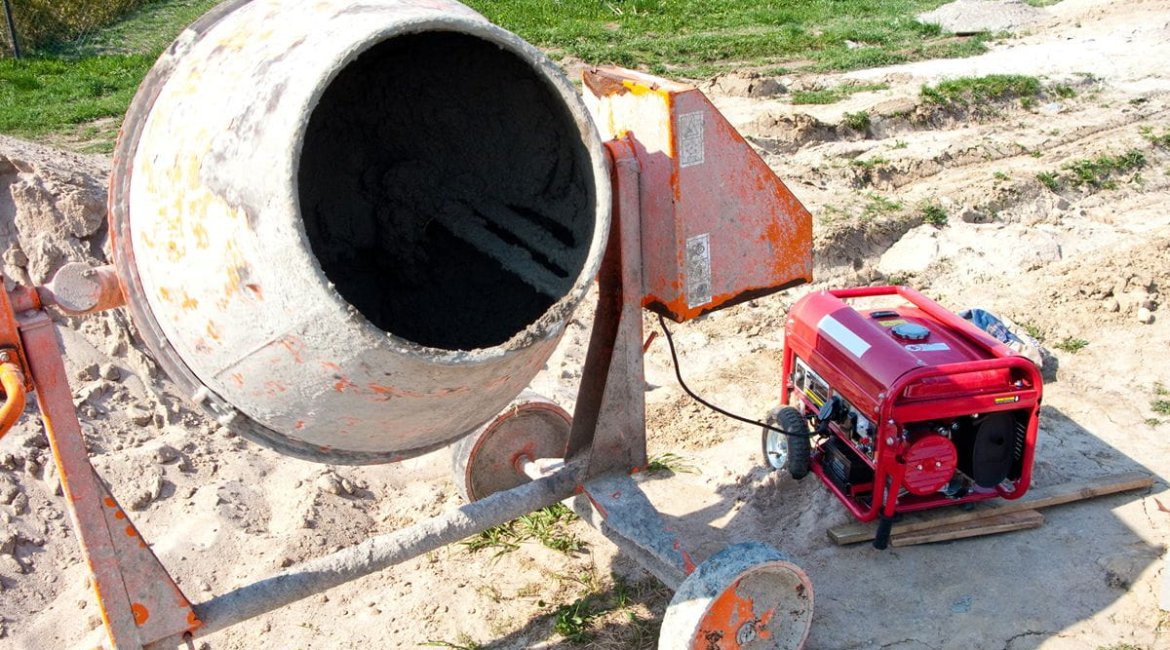
As you begin surfing the listings for a concrete mixer for sale. Naturally, your first instinct is to look for the best price. Though it is really tempting to buy an affordable piece of kit until you find yourself halfway through a pour when the build quality reveals itself to be not what you were expecting. At BS Power, we sell equipment designed to work every day on real sites, not just in corporate marketing shots, which is why we would like to explain exactly what makes a properly high-quality piece of kit, not just a good-looking one.
Investing in equipment for construction work is always a matter of practicality. Unfortunately, the practical truth is that a mixer that is badly made is going to cost you time lost, money spent repairing and additional material, rather than anything you will save on the actual purchase price. So, before you go out and buy any concrete mixer, what do you need to know about what is hidden underneath all that paint and advertising?
Concrete Mixer For Sale: What Build Quality Really Means
The vast majority of concrete mixers on offer at various markets come with claims about how they are the best, sturdiest and the least likely to have issues. In fact, just one of these words is hardly enough to go by. Build quality is not something intangible which you feel; rather, it is something concrete you can actually check beforehand by spending a rand.
This basically means it is the materials which were used for the drum, strength of the frame, drive system’s reliability, and the safety provided to the operator. Suppose it is your job to compare two concrete mixers for sale; you really have to find out about the thickness of the drum in millimetres, not just its volume in litres. Besides that, you have to find out what is the material from the frame is made of and how are they connected with one another.
Besides that, you have to find out whether the engine is a well-known brand with spare parts easily available in South Africa, or an obscure name that might leave you stranded when something goes amiss. Such matters weigh much more than colour schemes or how bright the equipment is in the warehouse.
It is also worth keeping resale value in mind, mostly when you are considering getting rid of or upgrading a kitchen appliance. A well-built appliance with clever design should not lose its value very quickly, unlike a lesser product which may look very worn out after a couple of years of intensive use. When you decide to sell or upgrade, and someone comes to examine your machine, he/she will be able to notice a significant difference between a machine that was kept in excellent condition from day one and was designed on a sound basis and one that the owner has repaired again and again until it still worked. If you make a step ahead like that and forget about the purchase price factor for a moment, it probably will result in a much better long-term decision.
Check The Drum And Steel Thickness First
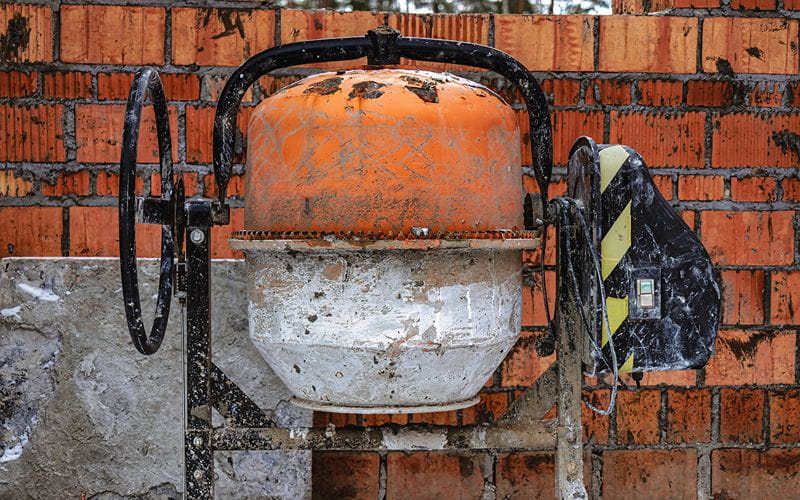
The drum is the fundamental element of any mixer and bears the worst of the wet concrete, the aggregate and all the rotational forces exerted upon it from the motor and gearbox. When viewing a concrete mixer for sale, it is the first item we advise customers to inspect. The use of shallow steel may reduce the maker’s cost, but it also means the drum wears more quickly, dents with more ease and ultimately weeps slurry from unanticipated flexing joints. Seek drum thicknesses of about three millimetres.
Consider it a marker you will find on our own selection, and it is proven over years of loading, mixing, and discharging. Such a thin drum may seem delicate, but with the combination of the right grade steel and correct welding, it becomes a resilient working surface that will not crack under load. Also watch the welding of the drum on the mixer.
Robot welding is consistent all the time, hand welding changes from unit to unit. The highest programmed quality I ever received was in welds, where the failures occur; right where the drum is in contact with the ring gear or the mounting brackets. If a seller is not able to inform you of any aspect of the welding process, or the thickness of the drum, their non-response tells you a lot about the product.
Our 420L concrete mixer with a Baumax engine is a fitting example of proper drum engineering. It has a 420 litre total drum volume, 320 litres unmixed and a mixed output of circa 220 litres based on your material. The drum rotates at 25rpm, has a wall thickness of 3mm, and the entire unit is robot welded rather than hand assembled- just the sort of consistency you want in a concrete mixer which will be in operation with large volumes of daily work.
Look Closely At The Frame And Chassis
The chassis carries the complete working load of the mixer; it takes the beating from the engine vibration, and it gets bumped when you tow a mixer to, for example, various spots on a site. If a concrete mixer for sale is in your sight, you can tip it a bit to observe how the support legs, wheels, and structure are assembled if you have the chance.
Channel iron construction and folding metal reinforcement have proven repeatedly to be much more resistant to wear versus thin tubular light weights that sag and bow with load. A good frame is one that is extraordinarily strong and not wobbly when the drum is full and rotating. Also, track width plays an especially key role here, since a narrow frame on an uneven or unstable surface will make the mixer much more likely to tip.
This is a real danger for the workers and the equipment. Ice, dust, or debris are all the stuff for punctures, so if you are looking at solid rubber wheels, then you will see why these are a good option with sealed bearings that cannot be damaged.
Evaluate The Engine And Drive System
The engine is the first factor which dictates whether or not your mixer will start every day (on time), and the most obvious sign of build quality on any new or used concrete mixer. Cheaper, lesser-brand engines are excellent value initially, but the lack of readily available spare parts and the mechanical unreliability of such engines start to show after the initial short warranty period has expired.
For this reason, all our mixers are fitted with Baumax or Honda engines which are widely supported and easily maintained in the South African market. Moving on from the engine badge, examine how power actually gets fed to the drum.
The twin V-belt drive system distributes the mechanical load more evenly than a single belt; this results in less slippage and a longer life for the entire drive system. This may seem like a trivial Mechanical feature, yet it will influence something important to how well the mixer performs under maximum wet concrete load and how often belt replacements are required. If what you need is a little more volume, then our 500L Concrete Mixer with Honda Engine should be considered. It has a drum volume of 500L in total, although the average Capacity Unmixed is around 420L, and the Mixed volume is approximately 280L.
The drum turns at 24rpm using a chassis constructed from channel iron and folded steel; its Drum Bottom is 3mm thick, and it uses the tried and tested Honda GX160LX Engine. This is a desirable choice for contractors and rental companies wishing to buy a concrete mixer that will accommodate larger amounts without sacrificing quality. Mix cycle time is also something you should inquire about. The shorter and better engineered your mix cycle can be, the more of your crew members will spend their time actually installing concrete versus waiting for a batch.
Choosing A Concrete Mixer You Can Trust
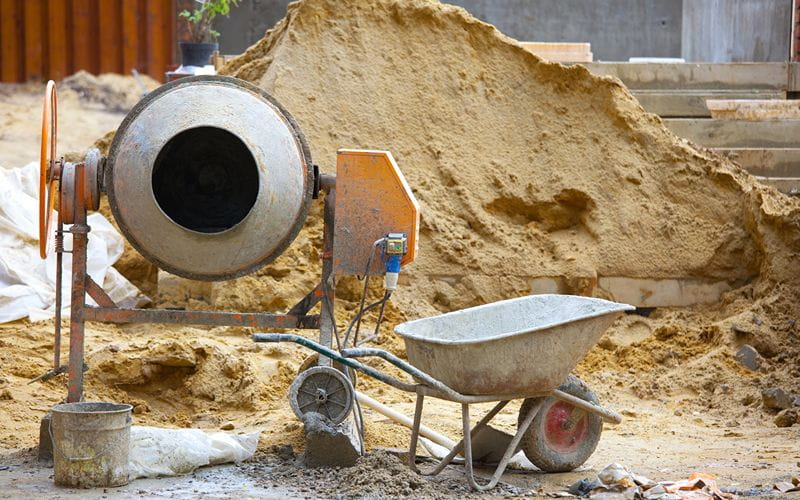
It all boils down to finding not just any machine with a lower price tag, but rather a concrete mixer built with quality materials. As an informed buyer in the industry, you will naturally go beyond the surface to find out what lies beneath the mixer’s external frame. What is the thickness of the drum, is the welding of high quality, how is the frame constructed, how dependable is the engine, and what are the safety features? These five features combined give an accurate measure of what the machine is actually worth rather than relying on the horsepower rating on the label or just taking into account the capacity of the mixing chamber to be sure.
If you are going to have the option of several concrete mixers or you simply need expert advice so that you can make sure of the right model for your site, please feel free to get in touch with our team here at BS Power. We will assist you in finding a suitable concrete mixer for sale which is perfectly suitable for the work you are doing.