




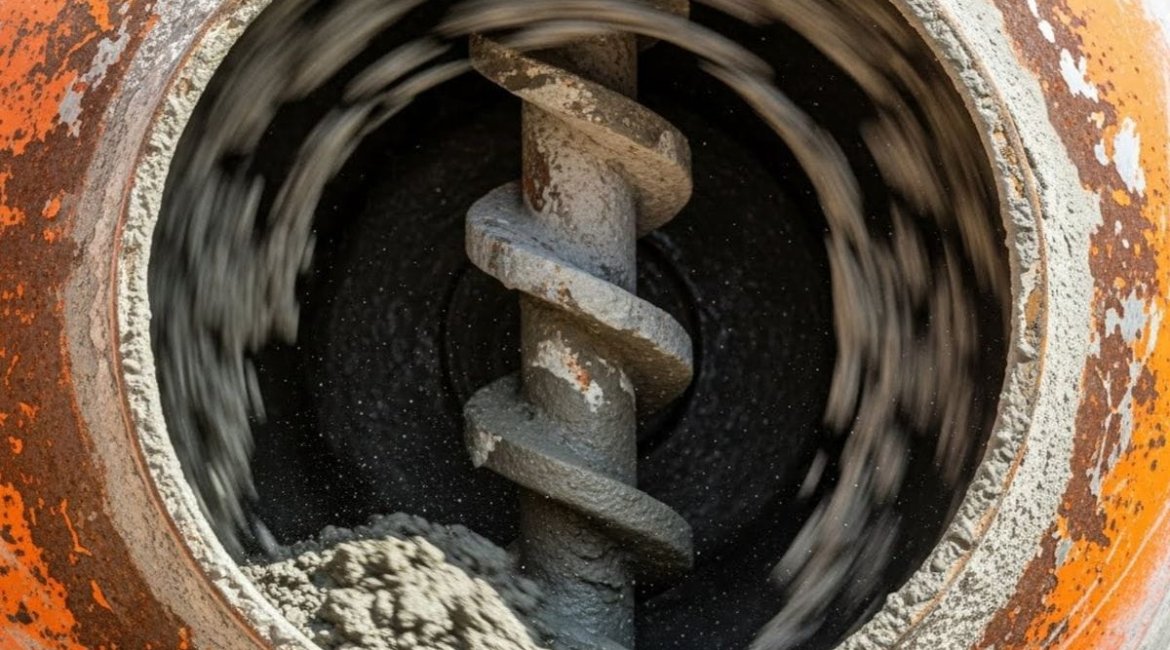
If you have ever operated a cement mixer in Cape Town, you have probably experienced the effects of corrosion. The Atlantic Ocean air defines the Western Cape lifestyle, but it also accelerates corrosion, weakening metal structures. The effects of salt air in coastal regions can increase maintenance costs. As with any metal-made equipment, exposure to salt-heavy air, mist and humidity encourages rust development faster than in inland regions.
At BS Power, we understand the challenge of protecting your investment from the elements. We work with the same coastal conditions. In this guide, we will discuss the effects salt air has on machinery, how to implement effective cleaning routines, how to protect the machine’s drum and chassis from corrosion, and how to store your cement mixer correctly to preserve its lifespan.
Coastal Conditions Damage Cement Mixers Faster
The Atlantic Ocean’s proximity to the city of Cape Town increases the deterioration of metals in the area. Why does this happen? The salt particles are consistently present, and these particles will settle on any exposed surfaces, including metal. The particles attract moisture and create an ideal environment for corrosion.
Research published in npj Materials Degradation explains how salt deposition significantly influences corrosion behaviour in metals exposed to marine conditions. In practical terms, any metal-made equipment operating in areas such as Bloubergstrand, Sea Point, Muizenberg, and Milnerton will experience accelerated corrosion compared to equipment used inland. Your cement mixer is not excluded from this accelerated deterioration.
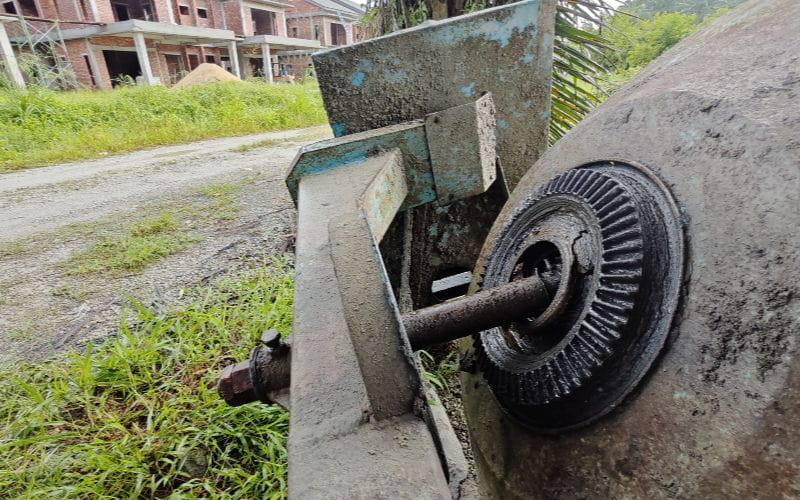
Salt particles will settle on the drum exterior of your cement mixer. The frame, bolts, bearings and gears are also vulnerable to exposure. Once moisture binds to the salt deposits, oxidation will begin, spreading to all metal surfaces. If this is left without regular intervention, your cement mixer’s structural integrity will start to weaken and eventually crumble, cutting the machine’s operational life considerably.
If you’re new to the coastal area, you should know that salt becomes airborne through sea spray and wave action. The wind, as unpredictable as it is, carries microscopic droplets from the ocean inland, settling on metal equipment. Even if your mixer is not directly positioned on the beachfront, coast winds prevail, transporting salt several kilometres inland.
The protective oxide layer that normally shields steel surfaces will be disrupted by the chlorides in salt. Once that barrier breaks down, corrosion accelerates aggressively.
Daily Cleaning Routines For Cement Mixers In Coastal Areas
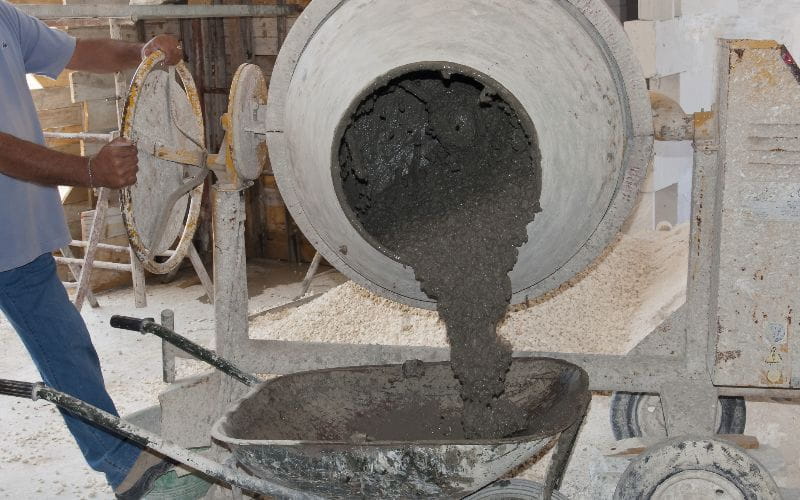
Now that we understand the effects of Cape Town’s climate on cement mixers, what can you do to prevent corrosion from taking over your equipment? Clean your cement mixer on a regular basis. You or your team should have a daily cleaning routine if the machine is stored and used in coastal areas. Daily cleaning is essential if you want to maintain your mixer.
Industry guidance from UK plant specialists AT Wilde Plant Parts suggests that you add clean water to the drum and rotate it to flush away loose material. The drum should be cleaned after every use. Rotating the drum with water after use will help remove any residue before it hardens to the surface. You should also rinse the drum exterior as well as the frame with fresh, clean water to remove salt deposits that settle during the day.
After rinsing the cement mixer, leave it to dry completely. The machine must never be stored wet. Moisture trapped overnight will significantly increase the risk of corrosion. If the machine cannot be placed in the sun to dry, make use of a fibre cloth and dry the machine thoroughly.
By cleaning and drying the machine, you are actively reducing the chance of rust forming on exposed surfaces. The core component of your cement mixer is the drum. Rust forming on the inside of the drum is very common in salty climates, but aggressive treatment will do more harm than good.
Avoid applying any heavy paint coatings inside the drum. Abrasion during mixing will very quickly strip away the paint. Instead, use a controlled abrasion process, running gravel with water inside the drum to remove hardened residue while smoothing light rust buildup. This process will help you avoid foreign coatings contaminating future mixes.
You and your team can reduce internal buildup with a proper loading sequence. You should add water before dry materials, as this helps prevent cement from bonding to the side of the drum. This small adjustment to your mixing habit can reduce scraping and chipping, which exposes the metal to salt air. Keep the drum clean and dry to protect the machine from coastal weather.
Preventing Chassis, Gears, and Bearing Rust On Cement Mixers
Your cement mixer’s chassis is especially vulnerable to Cape Town’s environment. The chassis is closest to the ground, where salt-laden moisture accumulates. Do not neglect this area of the machine, as rust will quickly develop and become costly to repair.
Inspect your mixer’s frame on a weekly basis. By paying close attention to the weld joints, cross member and bolt heads, you will prevent rust from going unnoticed. If you work on open sites, which is most of the time, salt particles will settle underneath the machine. You /’can rinse off the salt which has accumulated on the undercarriage with fresh water before the salt deposit binds with moisture. We recommend you rinse your cement mixer on a weekly basis.
You should address any chipped paint on the chassis. The smallest exposed patch can expand into widespread corrosion within a couple of months, so address any scratches and chips as soon as you notice them.
Salt can infiltrate moving components such as the ring gears, pinions and bearings, accelerating wear. If these components are insufficiently lubricated, it will lead to vibration and noise. Remember to grease the gear rings, creating a protective barrier, reducing friction and preventing moisture from settling. Always check the alignment of the mixer’s pinion gear, as this will ensure even wear distribution, preventing weakened mounting points.
We suggest you listen carefully to the sound coming from your mixer during operation. Noise, such as grinding sounds or excessive vibration, indicated bearing degradation. You should address these issues early on to prevent extensive mechanical damage. Lubricating these components significantly extends their lifespan.
Storage Best Practices For Cement Mixers In Cape Town
Where and how you store your mixer will affect its durability. If you leave the machine exposed overnight, the salt will settle even if it is not in operation. We recommend you store your mixer indoors in a shed or garage. Even a basic roof structure will reduce slt deposition. If indoor storage is not available, make use of a breathable cover which will shield the machine while allowing airflow. Plastic covers should be avoided as they trap condensation against the metal surfaces, worsening corrosion.
If possible, elevate the cement mixer, separating it from the damp ground. Coastal soil retains moisture and salt content, which will cause the lower frame to rust. You can elevate your mixer from the ground by storing it on a simple wooden pallet. A pallet allows for air to flow under the machine and separates it from dampness.
Protecting your cement mixer requires more than just a cleaning routine. By selecting the correct materials and protective treatment, you can prolong the lifespan of your cement mixer against the elements. Before purchasing a cement mixer, consider a model which is galvanised. This protective coating is specifically created for marine environments and reduces maintenance costs.
Here at BS Power, we supply clients with top-of-the-range, galvanised cement and concrete mixers. Our 420L Concrete Mixer with Baumax engine is protected with a protective coating which discourages the spread of rust. This Italian mixer design has a ring gear cover and enclosed engine cabin for operator safety as well as protection from the elements.
If your cement mixer has a protective paint, inspect the coating regularly. Marine corrosion studies confirm that protective coatings degrade in salty environments, requiring touch-ups in damaged areas. Inspection will allow you to recognise early signs of damage before corrosion spreads underneath the coating.
Your safety must remain a priority when maintaining your cement mixer. The Health and Safety Executive for Northern Ireland provide guidance on safe cleaning procedures for mixing drums, emphasising avoiding entry into confined drum spaces wherever possible. Make sure to always wear gloves and protect your skin from scratches. If you do obtain any deep and significant harm where rust entered the wound, ensure your tetanus vaccine is up to date; if not, visit your local doctor or clinic.
Prioritise external cleaning techniques for your cement mixer. The machine must be shut off before performing mechanical maintenance. Structured safety protocols will protect you and your team while carrying out maintenance.
Creating A Cape Town Coastal Maintenance Schedule
You and your team can protect your cement mixers by implementing a structured maintenance schedule. Your daily maintenance schedule should include rinsing the drum interior with water while rotating it to remove any residue. The schedule should mention washing the exterior frame and eliminating salt deposits.
Conducting visual inspections should be carried out to detect early signs of rust. A thorough routine will guarantee a long operational life of your investment. The schedule should include weekly rinsing of the undercarriage with fresh water and examining paintwork for scratches or chips. The bearings should be checked for wear and lubricated. All bolts should be fastened.
Protecting Your Cement Mixers In Cape Town
Maintaining your cement mixer in the Cape Town region demands a higher level of awareness. The salt air encourages corrosion, but this is entirely manageable if you take action. You will extend your mixer’s lifespan significantly by cleaning daily, protecting the chassis, maintaining proper lubrication, and storing the mixer responsibly. Coastal maintenance is about prevention rather than repair.
At BS Power, we understand the challenges coastal environments impose on the longevity of your equipment. By following the tips in this guide and using climate-specific strategies, you will protect your long-term investment.
If you are looking for a durable cement or concrete mixer suited to coastal environments or need any guidance on servicing or upgrades, BS Power is ready to assist you with solutions. For more information on our selection of durable and robust cement and concrete mixers, visit the BS Power website.