



If you had to walk into any hardware or garden shop in South Africa, you might hear people using the words brushcutter, weed eater, and line trimmer as if they were the same thing. But the truth is, they are not, and choosing the wrong tool can turn your simple Saturday task into a massively tiring mission. If you have ever tried trimming thick veld grass with a line trimmer or attempted edging a tidy garden bed with heavy brushcutters, you should know exactly what this feels like.
It’s simple, line trimmers and brushcutters are designed for completely different kinds of landscaping jobs. The first is built for light and precise garden maintenance, and the latter is built for power, endurance, and the clearing of dense, tough, and overgrown vegetation. Once you know and understand the difference between the two, choosing the right tool is easy, and you will save time, fuel, frustration and costly repairs.
As per a guide from Husqvarna South Africa, line trimmers are useful for neat finishing work, while brushcutters are useful for heavier conditions where a metal blade and a stronger engine are required. In this BS Power guide, we’re going to cut through the confusion and break down the real-world differences between these two landscaping tools, how they work, what they can handle, and which one is right for your home, garden, or landscaping business.
What Exactly Is A Line Trimmer?
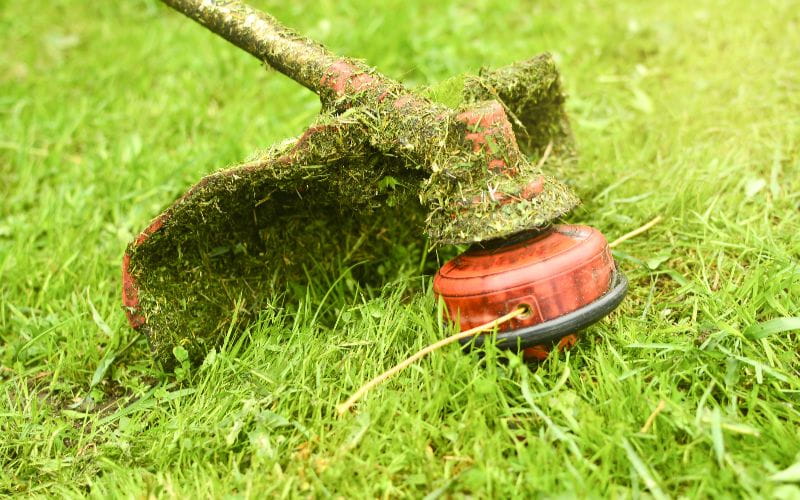
A line trimmer is a lightweight garden tool that is designed for cutting grass and softer vegetation by use of a fast-spinning nylon line. Here in SA, it is known to most of us as a “weed eater” or a grass trimmer. Basically, it’s the tool one uses when your mower can’t reach, along walls, along fences or under them, around trees, flowerbeds, and in those tight corners where a mower simply won’t fit.
Trimmers are meant to be used for everyday lawn upkeep, your edging and detail work, and not for heavy or overgrown areas. As it uses a nylon line, a line trimmer is flexible enough to avoid damaging any brickwork or garden edges, and this is why this tool is perfect for making finishing touches after you’ve finished mowing.
So, How Does A Line Trimmer Work?
Basically, a small motor (usually electric, battery or petrol-powered) spins the nylon cord at a high speed, and the whipping motions cut through small grass without destroying the soil. As the line is flexible, it’s forgiving around any obstacles and thus is ideal for neat and controlled trimming work.
A line trimmer is ideal if you need to tidy up those lawn edges that surround driveways or pathways, trim grass around trees, posts or tight spaces, maintain small to medium gardens, or if you need to cut soft weeds, new growth, and any reachable lawn “missed spots”.
Line trimmers are not built for tackling thick, waist-high grass, woody weeds or brambles, reeds found by riverbeds, or young saplings and tougher veld conditions.
If you use a line trimmer and push it into heavy growth, the nylon cord will snap, putting strain on the motor, and your job will take four times longer than it should. This is where a brushcutter should be used.
What Exactly Are Brushcutters?
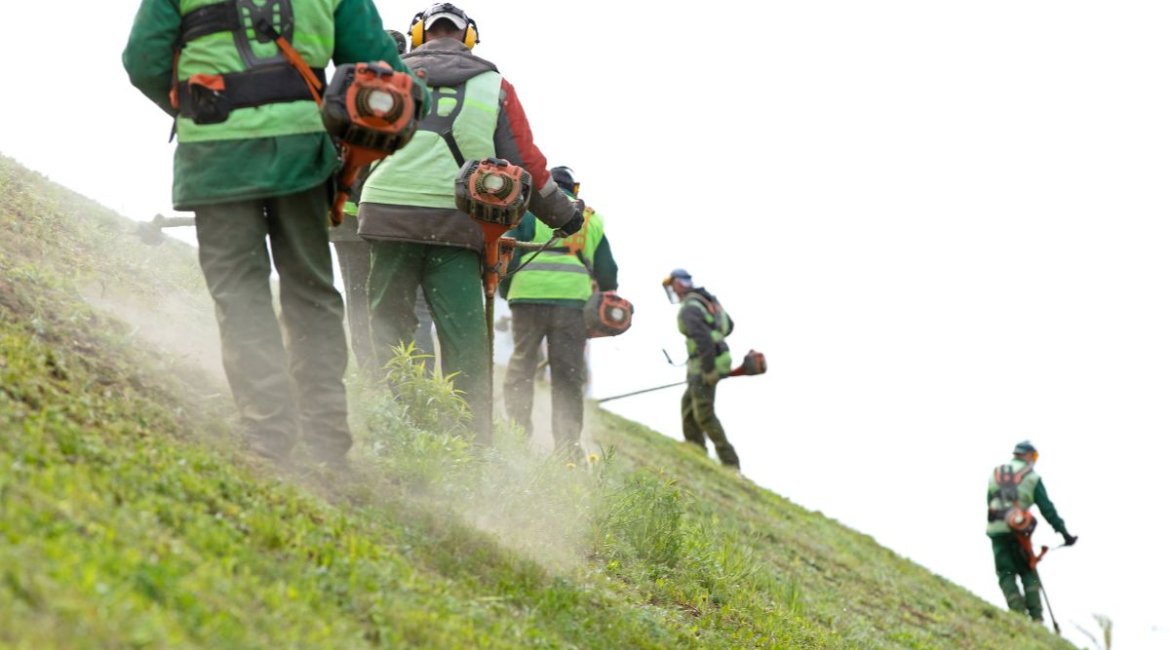
Brushcutters are a more powerful, heavy-duty tool that are designed for handling dense vegetation, tough grass, brambles, reeds, and even small saplings. As opposed to a line trimmer, which uses a flexible nylon line, brushcutters commonly use a metal blade or a reinforced cutting head. That difference alone should tell you what these tools are built for: strength, torque, and control when working with difficult terrain.
Brushcutters are specifically designed for “heavier clearing work” and should never be confused with basic line trimmers. They’re commonly used by landscapers, farmers, municipalities, and anyone who needs to clear thick or overgrown areas.
Basically, brushcutters make use of more powerful petrol engines, with rigid, straight shafts for strength, and bike-style handlebars for controlling that side-to-side swinging action, and a metal blade that is designed for cutting through dense vegetation. It is this setup that delivers the necessary torque and cutting power needed for vegetation that a nylon line just can’t handle.
Clearing thicker, veld grass or tall, overgrown areas, cutting down brambles, lantana or any invasive species, and maintaining smallholding plots, farms or any other kind of plot. They’re also great for taking on drainage lines, riverbank reeds, or the edges of properties that are overgrown.
Simply put, brushcutters are built for demanding jobs that require stamina, engine torque, and durability.
Brushcutters are not the ideal tool when you simply need to neaten up suburban lawns, do gentle detail edging around flower beds, work on small complex or townhouse gardens or for work where precision is required as opposed to power. Using brushcutters on neat gardens is basically like using a chainsaw to sharpen a pencil; it might work, but it’s overkill and difficult to control.
Brushcutters VS Line Trimmers At A Glance
You definitely don’t need a technical chart to understand the difference between line trimmers and brushcutters; it simply comes down to power, the type of vegetation, and how much control you need for the job. Line trimmers use flexible nylon cords which spin at high speeds and are safe for use around walls and other flexibles. On the other hand, brushcutters use steel blades or reinforced heads that are capable of slicing through reeds, brambles and thickly overgrown places.
Line trimmers use notably smaller motors, making them ideal for short sessions and garden maintenance, while the brushcutter uses a higher torque engine, making it perfect for long and demanding clearing sessions. Line trimmers are lightweight and easy to manoeuvre, which makes them amazing for those precise trimming jobs, while brushcutters are heavier; they require a harness, but they do provide more stability for sweeping and powerful cutting arcs.
Line trimmers are typically used by homeowners, gardeners in housing complexes, and casual gardeners. On the other hand, brushcutters are commonly used by landscapers, municipal contractors, the owners of small holdings, and workers on farms. So, if your vegetation is soft, short, and under control, then a line trimmer is perfect. If the vegetation, you’re working on is wild, thick, or has been ignored for a long time, then brushcutters are the sensible choice.
Safety & Comfort: Brushcutters VS Trimmers
When you’re making the choice between brushcutters and a line trimmer, it’s not only about power; you also need to consider safety, posture, fatigue, and how long you can realistically work. The Royal Horticultural Society guidance on grass trimmers and brushcutters highlights the importance of selecting the correct tool to reduce fatigue and avoid unnecessary damage. Each tool demands different handling, and the protective gear for each is not the same either.
Because brushcutters use metal blades and generate far more torque, the safety requirements are naturally more stringent. When you’re using a brushcutter, you should always have eye protection, ear protection, gloves, long trousers, steel-toe boots, and a proper harness. Debris can travel at high speeds, and wearing proper PPE can drastically reduce the chance of injury.
On the other hand, line trimmers are lighter and only use that aforementioned nylon cord. That being said, you should still wear eye and ear protection, and even though the risk level is lower than that of a brushcutter, you should still wear sturdy closed shoes.
Ergonomics VS Fatigue
Because brushcutters weigh more than line trimmers, and because they’re used for sweeping side-to-side cuts, using a good harness is recommended. A harness transfers the weight of the brushcutters to your hips, improves your balance, and reduces the strain on your lower back. On longer jobs, this makes a world of difference.
Many decent, pro-grade machines like the Stihl FS 410 and several of the Husqvarna models that we stock at BS Power come with anti-vibration systems, ergonomic handles, and multi-function controls that help reduce your fatigue when you’re busy cutting through tough vegetation for hours on end.
Line trimmers, on the other hand, are simpler, lighter, and easier to manoeuvre, so for those short gardening sessions, or edging work, they are notably less tiring. But if the vegetation you’re tackling is tough, or you’re clearing for more than 20 to 30 minutes, the advantage of comfort shifts towards brushcutters.
Brushcutters That Get The Job Done At BS Power
If you’re ready to take on anything from light lawn maintenance to tackling heavily overgrown areas, our brushcutter range at BS Power gives you several strong and reliable options. Whether you require something lightweight for trimming garden edges or a high-torque garden beast for taking on thick scrub, we’ve got a model to suit your needs.
STIHL FS 230 Brushcutter
The Stihl FS 230 Brushcutter is a popular, well-balanced petrol brushcutter that is best suited for homeowners, estates, complexes, and light to medium maintenance work. It provides strong cutting performance without being too heavy, which makes it ideal for those long trimming sessions around larger gardens or properties.
STIHL FS 250 Brushcutter
This Stihl model is a step up in power and durability, and is a versatile, mid-range choice that can handle thicker, stubborn vegetation, which makes it a great choice for larger residential plots, smallholdings and landscaping teams who need that extra bit of torque for challenging jobs.
STIHL FS 280 Brushcutter
The Stihl FS 280 is designed for even tougher and more demanding clearing work. It’s built for dense growth, veld grass, and rugged environments where using a standard trimmer won’t cut it. It’s the ideal option for farms, plots, rural properties, and anyone who needs to clear overgrown areas on a regular basis.
Husqvarna 541 RST Brushcutter
Our favourite Husqvarna model at BS Power, the 541 RST, is a durable, professional-grade machine that has been built for hot, dusty, and uneven conditions, exactly the kind of environments many South African landscapers face. It boasts high torque and robust construction, making it well-suited for thick grass, reeds, invasive species and full-day clearing work.
Which Tool Is Best For You?
Making the decision between a brushcutter and a line trimmer essentially comes down to the kind of vegetation you’re going to be working on. If you’re working with a garden that is neat, controlled, and mostly lawn, a lime trimmer is all you’ll need.
If you’re tackling thick grass, brambles, reeds, or long-neglected growth, then brushcutters are your best bet for providing the power, control, and durability you’ll need to get the job done, quickly and safely. Here at BS Power, you’ll find a range of STIHL and Husqvarna brushcutter options that have been built for our climate, terrain, and the kind of vegetation our landscapers face every day.
Visit our website today to explore our full range.